





Apple Issues Critical Security Patch: Understanding the iOS 26.4.2 and iOS 18.7.8 Emergency Updates
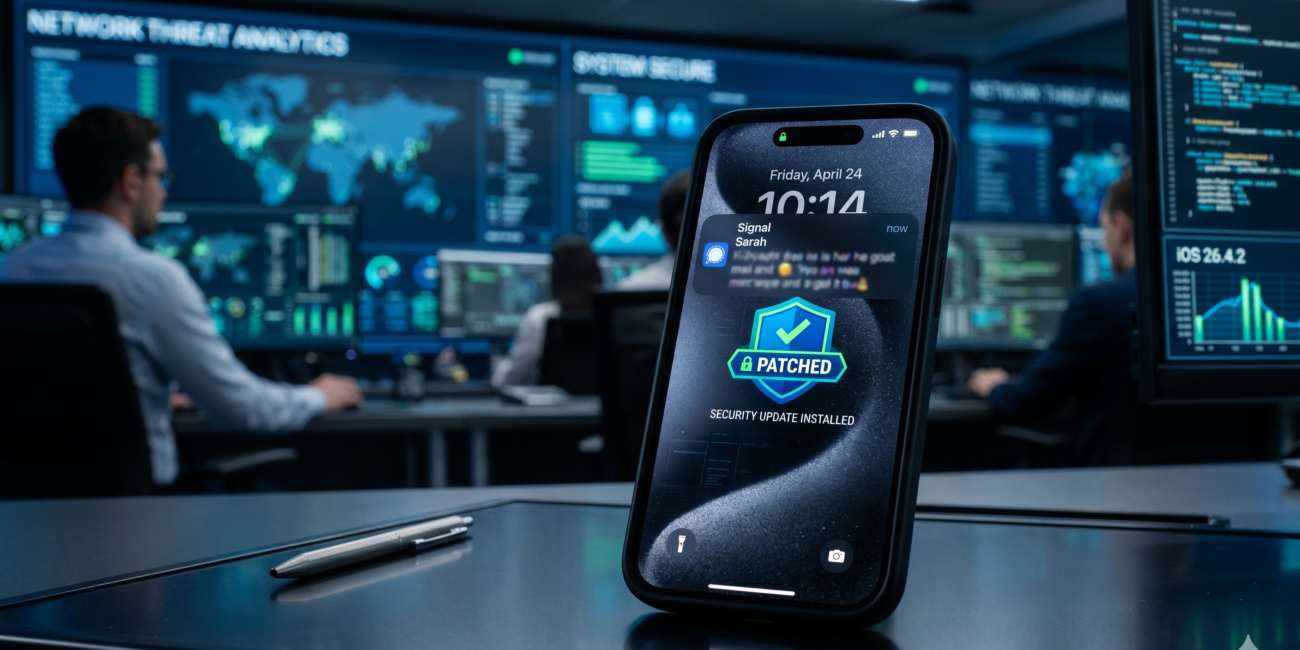
The global cybersecurity landscape shifted significantly this week as Apple deployed two urgent software updates, iOS 26.4.2 and iOS 18.7.8, to address a profound privacy vulnerability that threatened the fundamental promise of the iPhone’s secure ecosystem. This emergency intervention was not prompted by the typical suite of performance enhancements or aesthetic refinements that usually accompany Apple’s software cycles. Instead, it was a rapid response to a discovered flaw that allowed seemingly deleted data to persist within the device’s internal architecture, potentially exposing sensitive communications to forensic extraction by law enforcement and sophisticated bad actors alike.
The discovery of this vulnerability has sent ripples through the tech community because it touches upon the one area where Apple has consistently claimed superiority over its competitors: user privacy and the “sandboxing” of sensitive data. For years, users of encrypted messaging platforms like Signal and WhatsApp have relied on the belief that once a message is deleted or an app is uninstalled, the data is permanently purged from the hardware. These recent developments prove that a systemic logging error within the iOS Notification Center created a “ghost” trail of data that bypassed these standard privacy expectations.
The Technical Failure of Notification Logging
At the heart of this security crisis is a technical oversight identified as a failure in how the iOS operating system manages notification previews. When a user receives a message, the system generates a notification that often includes a snippet of the content. While the messaging app itself may be encrypted and designed to delete messages after a set period, the iOS system-level notification service was found to be storing these snippets in a separate, persistent database. This database, intended to manage the flow of alerts to the user, did not always synchronize its deletion protocols with the primary application.
The result was a significant security gap where a user could delete a conversation or even wipe an entire application from their phone, yet the notification logs would remain hidden deep within the system’s directory. Because these logs were not being properly cleared, they became a goldmine for forensic investigators. This flaw effectively undermined the “disappearing messages” features that many professionals, activists, and high-security users rely on for confidential communication. The persistence of this data meant that even a device that appeared “clean” to the naked eye could still hold weeks or months of sensitive text fragments and metadata.
Real World Consequences and the FBI Investigation
The urgency of the iOS 26.4.2 and 18.7.8 updates became clear following reports regarding a high-profile criminal investigation involving the FBI. Forensic documents surfaced showing that federal investigators were able to recover extensive communication records from an iPhone even after the owner had deleted the Signal app. This was a shocking revelation for the privacy community, as Signal is widely considered the gold standard for encrypted communication. The FBI did not break Signal’s end-to-end encryption; rather, they exploited the fact that Apple’s operating system had failed to protect the notification snapshots of those encrypted messages.
This incident highlighted a critical disconnect between application-level security and operating system-level security. While the developers of privacy-focused apps can ensure that their own databases are wiped, they have limited control over how the underlying operating system handles the alerts and banners that pop up on the home screen. By failing to purge these temporary files, iOS created an inadvertent backdoor. The realization that law enforcement was actively using this method to bypass encryption served as the primary catalyst for Apple to move from a standard update schedule to an emergency release.
A Rare Dual Path Update for Legacy Support
One of the most telling signs of the severity of this vulnerability is Apple’s decision to release updates for two different generations of its operating system simultaneously. Typically, Apple focuses its security efforts on the most recent version of iOS, encouraging users to upgrade to the latest hardware and software. However, by releasing iOS 18.7.8 alongside the modern iOS 26.4.2, the company acknowledged that the flaw is deeply rooted in the core code of the iPhone’s architecture, affecting millions of older devices that are no longer compatible with the newest OS versions.
This “backporting” of security patches is a rare occurrence reserved for only the most critical threats. It indicates that the notification logging issue is not a new bug introduced in recent versions, but rather a long-standing architectural flaw that has likely existed for several years. By providing a patch for older devices, Apple is attempting to close a loophole that could be exploited across a massive global install base. For users who have remained on older software versions to avoid performance slowdowns or because their hardware is aging, this update represents a mandatory safety requirement that outweighs any concerns over system speed.
The Broader Risk to Personal and Corporate Data
While much of the initial focus has been on private messaging, the implications of this flaw extend far into the corporate and financial sectors. Notification logs do not discriminate between a casual text message and a sensitive business alert. Many users receive two-factor authentication codes, bank transaction alerts, and confidential work emails via notifications. If these snippets are stored indefinitely in an unpurged system log, they provide a blueprint of a user’s digital life. A lost or stolen phone, if subjected to forensic tools before being patched, could yield a treasure trove of bypass codes and financial data that the user assumed were long gone.
For businesses, this vulnerability poses a significant compliance risk. Companies that handle sensitive health or financial data under strict privacy regulations must ensure that their employees’ mobile devices do not inadvertently leak information through system logs. The persistence of “deleted” data can lead to unintentional violations of data protection laws if a device is decommissioned or audited. This is why IT departments around the world are currently scrambling to ensure that all company-managed iPhones are updated to the latest versions immediately, bypassing the usual testing phases for non-critical software updates.
Protecting the Future of Mobile Privacy
The release of iOS 26.4.2 and 18.7.8 is a necessary fix, but it also serves as a stark reminder of the complexities of modern digital privacy. It proves that security is only as strong as the weakest link in the chain, which in this case was a simple logging service for notifications. As Apple moves forward, this incident will likely lead to a more rigorous auditing of how system-level services interact with third-party encrypted applications. The company has a vested interest in maintaining its reputation as a privacy-first organization, and this emergency patch is a massive step toward regaining the trust of its most security-conscious users.
Users are encouraged to verify their current software version by navigating to the general settings of their device. Beyond simply installing the update, experts suggest that users take an active role in managing their notification privacy. By limiting the amount of content shown in notification previews when the phone is locked, users can add an additional layer of protection. This ensures that even if the system creates a log of a notification, the actual content of that notification is not captured in a readable format without biometric authentication. This combination of hardware updates and proactive user settings remains the best defense against the evolving tactics of data recovery and forensic exploitation.