





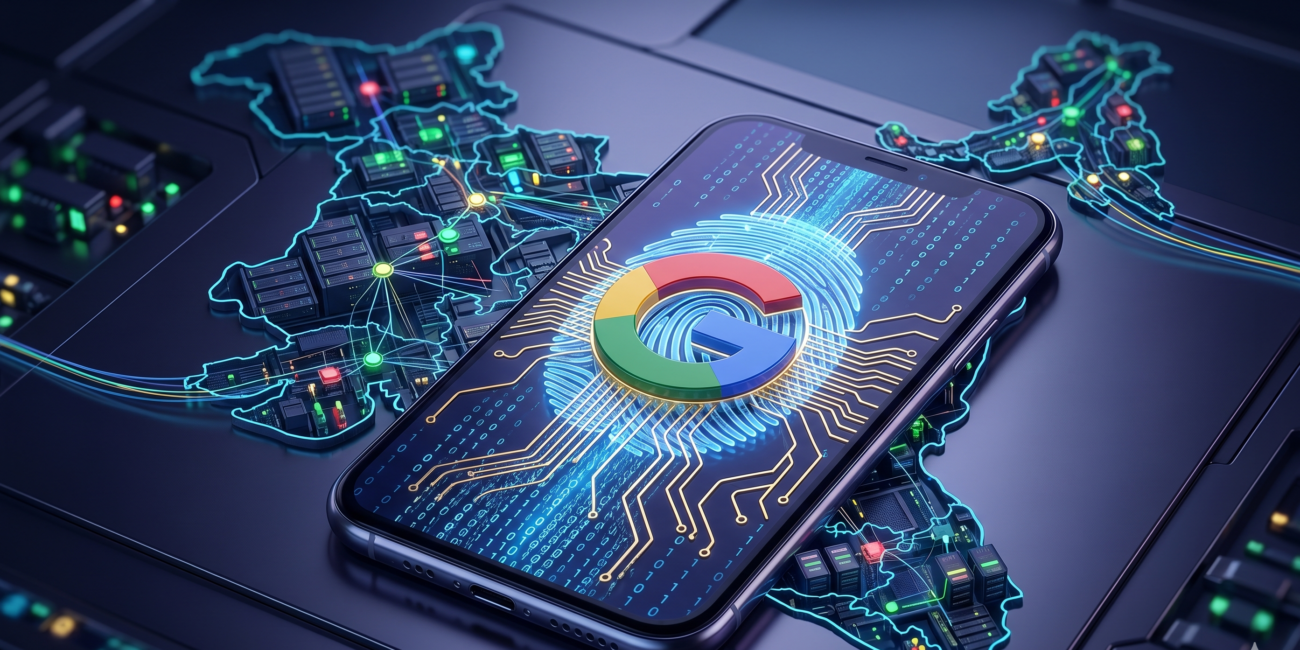
The Convergence of Identity: Navigating the New Era of Aadhaar and Google Integration in India
The digital architecture of India has reached a transformative milestone as the boundaries between state-issued identification and private global platforms begin to blur. For over a decade, Aadhaar has functioned as the primary ledger for the Indian citizenry, evolving from a simple biometric ID into the mandatory backbone of the nation’s financial and social security systems. However, the recent development concerning the “soft-linking” of Aadhaar with Google accounts marks a significant shift in the philosophy of the Digital India Stack. This integration signifies a move toward a “Verified Web,” where the convenience of a single digital gateway meets the complex reality of government-mandated identity. While the move promises to revolutionize how hundreds of millions of Indians access services, it also introduces a new set of challenges regarding data sovereignty, platform power, and the fundamental right to digital privacy.
Understanding the Mechanism of the Soft-Link
To describe this development as a simple “linking” of databases is technically inaccurate and misses the nuance of the integration. In reality, Google has implemented a sophisticated bridge using the existing Aadhaar-based authentication APIs provided by the Unique Identification Authority of India (UIDAI). This “sort-of” link means that Google does not possess a copy of the Aadhaar database; rather, it has become a high-level facilitator for the Digital India Stack. By embedding these verification protocols directly into the Android operating system and Google’s suite of apps, the company has created a “One-Tap” ecosystem for identity.
When a user attempts to open a bank account, apply for a government subsidy, or even verify their age for restricted content on YouTube, the Google account now acts as an encrypted conduit to the UIDAI. The hardware-level security of modern smartphones—such as Secure Enclaves and Trusted Execution Environments—is used to facilitate this exchange. This removes the “onboarding friction” that has long plagued the digital economy in India. Instead of carrying physical cards or navigating clunky government portals, the user’s legal identity is now tethered to their mobile presence, creating a seamless flow between the physical citizen and their digital representative.
The Emergence of the Verified Digital Persona
The primary impact of this integration is the creation of what sociologists and tech experts call a “Verified Digital Persona.” Historically, the internet was a realm of pseudonymity. A person could maintain a professional identity on LinkedIn, a social identity on Facebook, and a private identity on Google, all of which were legally disconnected from their government-issued ID. The soft-linking of Aadhaar effectively ends this separation. By bridging these two worlds, Google and the Indian government are creating a system where every major digital action can be traced back to a verified legal individual.
This convergence is a powerful tool for eliminating “ghost accounts,” reducing online fraud, and ensuring that government benefits reach the intended recipients without leakage. However, it also creates a permanent digital footprint where a person’s private platform interactions could, in theory, be mapped against their government records. While the biometric data remains locked within government vaults, the “meta-data” of these interactions—knowing exactly when, where, and why a citizen verified their identity—becomes a massive data asset. This raises the specter of “Function Creep,” where a system built for convenience eventually becomes a tool for pervasive oversight.
Data Sovereignty and the Role of Global Tech Giants
The integration brings the debate over data sovereignty to the forefront of the national conversation. India has consistently advocated for “data localization,” insisting that the data of its citizens remain within its borders. However, when the primary gateway to a national identification system is a platform headquartered in another country, the definition of sovereignty becomes complicated. Google’s role as the “Super-App” gateway for the Indian digital economy means that a private, foreign corporation now holds a critical position in the delivery of essential public services in India.
This “Infrastructure Capture” suggests a future where the state is partially dependent on the technical stability and terms of service of a private entity to interact with its own citizens. While this partnership allows for rapid modernization, it also creates a strategic vulnerability. If Google were to alter its policies or face technical outages, the ripple effect could disrupt the ability of millions to access their bank accounts or government services. The balance of power in this relationship is delicate, as the government seeks to leverage Google’s reach while attempting to maintain absolute control over the underlying identity data.
Security Implications and the Risk of Centralized Failure
From a technical standpoint, the soft-linking relies on encrypted e-KYC (Electronic Know Your Customer) packets and secure QR code specifications. This is inherently more secure than the traditional method of sharing physical photocopies of identity documents, which are easily lost or forged. However, this transition creates a massive centralized point of failure. In the past, a compromised Google account meant losing access to emails and photos. In the new integrated landscape, a compromised Google account could mean the theft of a verified identity.
If an attacker gains access to a user’s Google account through sophisticated phishing or device theft, they essentially hold the keys to the user’s legal and financial life. This necessitates a total reimagining of mobile security. Both the UIDAI and Google must move beyond the current reliance on SMS-based Multi-Factor Authentication, which is increasingly vulnerable to “SIM-swapping” and interception. The industry is now under pressure to implement biometric-only authentication or hardware-based security keys as the standard for any action involving the Aadhaar-Google bridge.
Bridging the Digital Divide and the Risk of Exclusion
While the urban, tech-savvy population will likely embrace the convenience of this integration, the impact on India’s rural and digitally marginalized communities is less certain. India’s digital divide is not merely a matter of device access; it is a gap in digital literacy. For many users, the intricacies of a Google account being “soft-linked” to their Aadhaar may be entirely opaque. This lack of understanding can lead to exploitation by “digital middlemen” who offer to help with the setup but gain unauthorized access to the user’s private data in the process.
There is also the recurring issue of “Digital Exclusion.” Aadhaar authentication is known to suffer from occasional failures due to biometric mismatches or connectivity issues in remote areas. When these failures are layered with the complexities of a third-party platform’s software, the risk of a “Sync Error” preventing a citizen from accessing food subsidies or fuel becomes a serious socio-economic concern. For the integration to be truly successful, it must include robust “fail-safe” mechanisms that ensure a technical glitch between a platform and a database does not result in the denial of basic human rights.
Conclusion: Defining the Future of the Verified Web
The soft-linking of Aadhaar with Google accounts is the opening chapter of a new era for the internet in India—the era of the “Verified Web.” This shift represents a fundamental trade-off: users are offered unprecedented convenience and security in exchange for a more transparent and traceable digital life. As India serves as a global laboratory for this massive integration of public ID and private platforms, the world is watching to see how the balance between efficiency and privacy is struck.
The ultimate success of this experiment will depend on the strength of India’s legal frameworks, particularly the implementation of a robust Data Protection Act. Without strong legal guardrails, the convenience of the “One-Tap” identity could easily turn into a tool for unprecedented overreach. The convergence of Aadhaar and Google is an inevitable step in the evolution of a digital nation, but it requires constant vigilance to ensure that the technology remains a servant of the citizen, rather than a master of the person’s privacy. In the coming years, the challenge will be to maintain the “human” in the middle of this vast digital stack, ensuring that identity remains a right to be exercised, not just a data point to be managed.