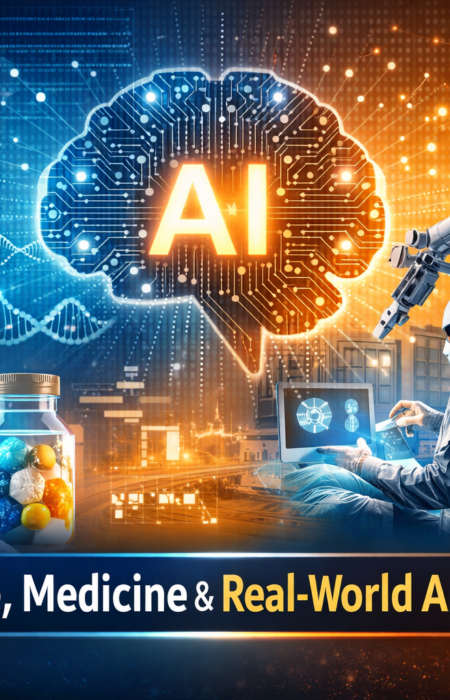



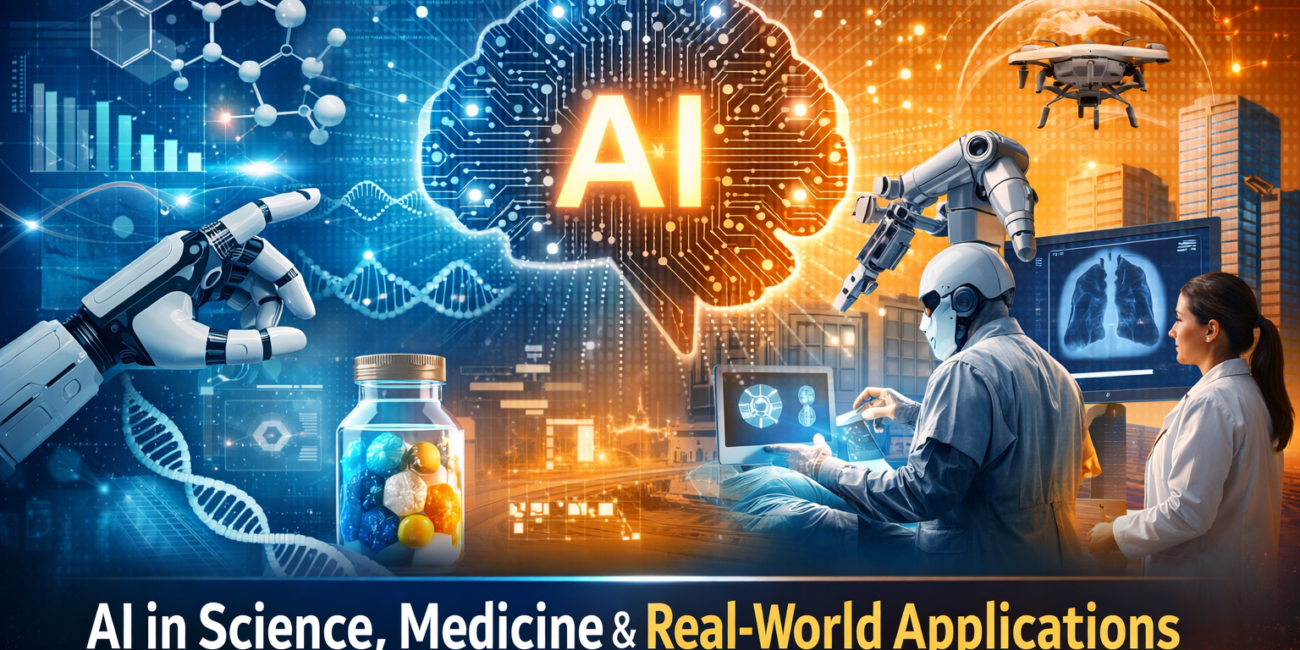
Artificial Intelligence (AI) has rapidly evolved from a theoretical concept into a powerful technology that is transforming almost every sector of human life. Today, AI in science, AI in medicine, and AI in real-world applications are driving innovation, efficiency, and accuracy at a global scale. By enabling machines to learn, analyze data, and make intelligent decisions, AI is reshaping how we solve complex problems and improve everyday life.
This SEO-optimized article explores the role of artificial intelligence in scientific research, healthcare, and real-world industries while highlighting its benefits, challenges, and future potential.
What Is Artificial Intelligence?
Artificial Intelligence refers to the simulation of human intelligence in machines that are programmed to think, learn, and adapt. AI systems use technologies such as machine learning, deep learning, natural language processing, and computer vision to perform tasks that typically require human intelligence.
From analyzing massive datasets to recognizing images and predicting outcomes, AI has become a foundation of modern digital transformation.
AI in Science: Revolutionizing Research and Discovery
Faster Scientific Research and Data Analysis
One of the biggest advantages of AI in science is its ability to process and analyze large volumes of data with exceptional speed and accuracy. Traditional scientific analysis can take months or even years, but AI-powered tools can identify patterns, correlations, and insights in minutes.
Scientists now use AI to accelerate discoveries in physics, chemistry, biology, and astronomy. AI models help simulate complex systems, predict outcomes, and reduce the need for repetitive manual calculations.
AI in Climate and Environmental Science
AI plays a critical role in climate change research and environmental protection. By analyzing satellite images, weather data, and historical climate records, AI helps predict natural disasters such as floods, droughts, and hurricanes.
AI also supports sustainable development by optimizing renewable energy systems, improving energy efficiency, and monitoring deforestation and pollution levels. These applications make AI a vital tool in protecting the planet.
Smart and Automated Laboratories
AI-powered automation is transforming modern laboratories. Intelligent robots can conduct experiments, collect results, and learn from previous data to improve future experiments. This automation reduces human error, lowers costs, and significantly increases research productivity.
AI in Medicine: Transforming Healthcare Systems
AI for Medical Diagnosis and Imaging
AI in medicine has shown remarkable success in disease detection and diagnosis. AI algorithms analyze medical images such as X-rays, CT scans, and MRIs to detect diseases like cancer, heart conditions, and neurological disorders at early stages.
Early diagnosis improves survival rates, reduces treatment costs, and enhances patient outcomes. AI-based diagnostic tools are now assisting doctors in making faster and more accurate decisions.
Drug Discovery and Vaccine Development
AI is revolutionizing drug discovery by reducing development time and cost. Machine learning models analyze biological data to predict how drugs will interact with the human body. This helps researchers identify promising drug candidates quickly.
AI proved especially valuable during global health crises by speeding up vaccine research and treatment identification, saving countless lives.
Personalized Medicine and Patient Care
AI enables personalized healthcare by analyzing a patient’s genetics, medical history, lifestyle, and environmental factors. This allows doctors to create customized treatment plans tailored to individual needs.
Personalized medicine reduces side effects, improves treatment success, and represents the future of healthcare.
Robotic Surgery and Virtual Health Assistants
AI-powered surgical robots assist surgeons with high precision, leading to smaller incisions, reduced pain, and faster recovery times. Meanwhile, AI chatbots and virtual health assistants help patients manage appointments, medications, and health information, improving accessibility to healthcare services.
AI in Real-World Applications and Everyday Life
Smart Cities and Urban Development
AI is a key driver of smart cities. Intelligent traffic systems reduce congestion by optimizing traffic flow in real time. AI-powered surveillance enhances public safety, while smart waste management systems improve efficiency and sustainability.
City planners use AI to design better infrastructure, reduce environmental impact, and enhance the quality of urban life.
AI in Transportation and Logistics
Autonomous vehicles and AI-driven transportation systems are changing how people and goods move. AI improves road safety through features like collision detection, lane assistance, and adaptive cruise control.
In logistics and supply chain management, AI optimizes delivery routes, reduces fuel consumption, and ensures faster deliveries.
AI in Business and Industry
Businesses use AI to automate tasks, analyze customer behavior, and improve decision-making. AI-powered tools help companies forecast demand, manage inventory, detect fraud, and personalize customer experiences.
Manufacturing industries rely on AI for predictive maintenance, quality control, and process optimization, leading to higher productivity and lower costs.
AI in Education and Daily Activities
AI in education supports personalized learning through adaptive platforms that adjust content based on a student’s performance. Virtual tutors and automated assessments help improve learning outcomes.
In daily life, AI powers voice assistants, recommendation systems, smart home devices, and language translation tools, making technology more convenient and user-friendly.
Challenges and Ethical Issues of AI
Despite its advantages, artificial intelligence raises important ethical and social concerns. Data privacy, security risks, biased algorithms, and job displacement are major challenges. AI systems depend on data, and biased data can lead to unfair outcomes.
Responsible AI development requires transparency, ethical guidelines, and human oversight to ensure fairness and trust.
Future of Artificial Intelligence
The future of AI lies in collaboration between humans and machines. AI will continue to support scientists, doctors, businesses, and governments by handling complex data-driven tasks, while humans focus on creativity, ethics, and decision-making.
AI in science, medicine, and real-world applications will play a crucial role in solving global challenges, improving quality of life, and shaping the digital future.
Conclusion
Artificial Intelligence is transforming science, healthcare, and everyday life in powerful ways. From accelerating scientific discovery to improving medical care and optimizing real-world systems, AI has become an essential technology of the modern era. With responsible development and ethical use, AI has the potential to create a smarter, healthier, and more sustainable world.

Other Articles
Agentic AI: The Next Evolution of Artificial Intelligence