




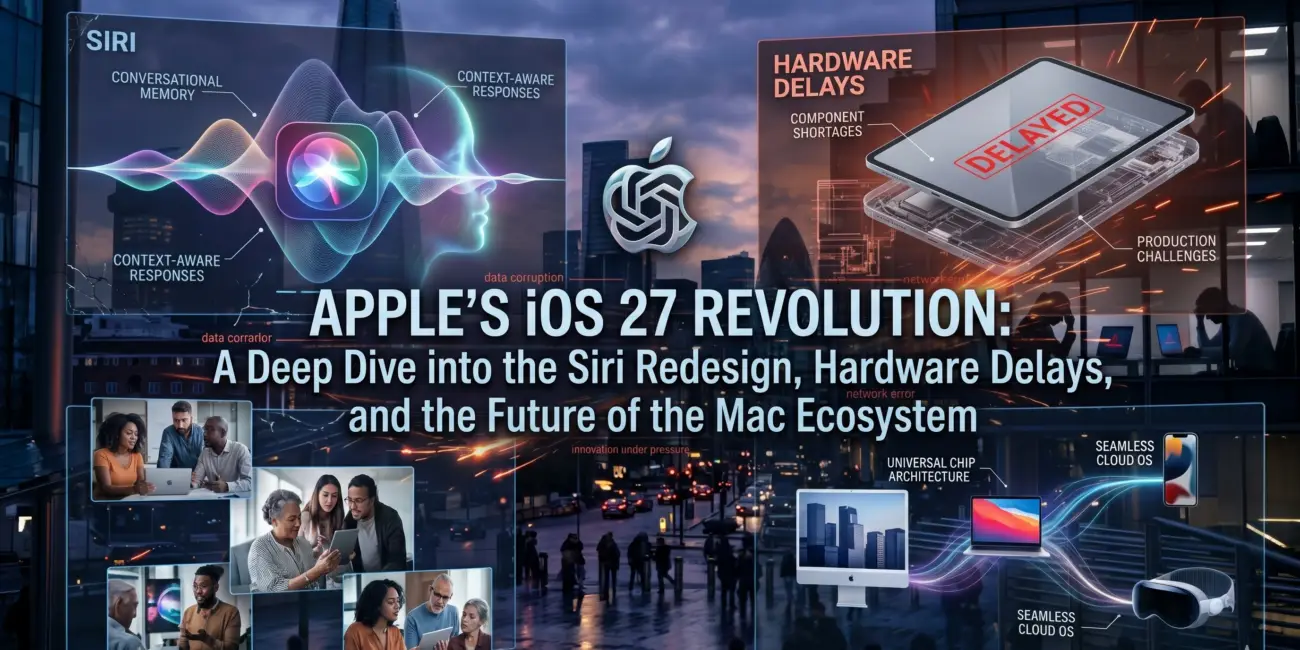
Apple’s iOS 27 Revolution: A Deep Dive into the Siri Redesign, Hardware Delays, and the Future of the Mac Ecosystem
The global technology landscape is currently bracing for one of the most significant shifts in Apple’s history as details regarding iOS 27 and the upcoming hardware roadmap begin to surface. Following a series of strategic leaks and the latest insights from industry analysts, it has become clear that Apple is preparing to move beyond the incremental updates of the past decade. The center of this transformation is a complete reimagining of Siri, moving the digital assistant from a secondary voice tool to a primary, AI-driven interface that will define the user experience across the iPhone, iPad, and Mac. As the company prepares for its upcoming developer conference, the stakes have never been higher for the Cupertino giant to prove it can compete in an era dominated by advanced generative AI models.
The most striking revelation regarding iOS 27 is the total overhaul of the Siri interface. For years, users have interacted with Siri through an overlay that often obscured the screen or felt disconnected from the underlying operating system. With iOS 27, Apple is reportedly integrating Siri directly into the Dynamic Island. This move is more than just a cosmetic change; it represents a fundamental shift in how Apple views the relationship between the user and the device. When triggered, the Dynamic Island will expand to reveal a “Search or Ask” prompt accompanied by a glowing cursor, signaling that the device is ready for complex, multi-modal inputs. This integration suggests that Siri will no longer just be a voice assistant but a persistent layer of intelligence that lives within the hardware’s most prominent interactive element.
Beyond the interface, Apple is introducing a standalone Siri application, a move that marks a departure from its traditional “feature-first” approach. This dedicated app will function similarly to advanced AI platforms like ChatGPT, allowing users to engage in long-form, back-and-forth conversations while maintaining a comprehensive history of past queries. This history feature is a direct response to user demand for a more continuous and contextual AI experience. By treating Siri as a standalone destination, Apple is acknowledging that users now require a central hub for their digital inquiries, one that can handle complex reasoning and provide a permanent record of information rather than just executing immediate, one-off commands.
While the AI features are garnering the most headlines, iOS 27 is also being positioned as a “polishing” update. Following several years of feature-heavy releases that occasionally compromised system stability, Apple is prioritizing under-the-hood improvements. Reports indicate a renewed focus on battery efficiency and bug fixes, ensuring that the new AI capabilities do not come at the cost of the iPhone’s legendary reliability. Interestingly, one of the most celebrated additions to iOS 27 is a deceptively simple one: the introduction of Undo and Redo buttons for Home Screen customization. This long-requested feature will allow users to instantly reverse accidental movements of widgets or icons, solving a persistent frustration for those who spend time meticulously organizing their digital workspace.
However, the news is not entirely positive for Apple enthusiasts, as the company’s hardware ambitions are facing significant headwinds due to a global shortage of memory chips. This shortage has forced a recalibration of the 2026 hardware roadmap, most notably impacting the professional-grade Mac lineup. The highly anticipated M5 Max and M5 Ultra Mac Studio models, which were initially expected to debut in the middle of the year, have now been pushed back to a projected October 2026 release. This delay is particularly impactful for high-end creative professionals and developers in tech-forward regions like Patna, where the demand for local processing power is at an all-time high for tasks involving 3D rendering and machine learning development.
The delay also extends to the much-discussed Touchscreen MacBook Pro. For years, Apple resisted the urge to bring touch capabilities to its laptop lineup, but internal pressure and market trends have finally led to a change of heart. This upcoming redesign is expected to be the most significant overhaul of the MacBook Pro since the transition to Apple Silicon. In addition to a thinner, more industrial design, the new machines are slated to feature OLED displays and the next-generation M6 chips. Unfortunately, the same supply chain constraints currently pushing back the Mac Studio are also sliding the Touchscreen MacBook Pro toward a late-2026 or even early-2027 release window. When it eventually arrives, it is rumored to include a version of the Dynamic Island on the Mac, finally bridging the gap between Apple’s mobile and desktop interface languages.
In addition to the core devices, Apple is quietly expanding its footprint in the smart home and wearable sectors. The report highlights the development of a new smart home hub, internally referred to as the HomePod Touch. This device will feature a seven-inch screen and act as a central controller for the modern household, relying heavily on the revamped Siri for navigation and automation. Simultaneously, Apple is continuing its work on lightweight smart glasses, codenamed N50. Unlike the heavy Vision Pro headset, these glasses are intended for daily wear, focusing on augmented reality notifications and voice-driven assistance. These secondary devices are crucial components of the iOS 27 ecosystem, as they will serve as the primary conduits for Apple’s new AI intelligence outside of the iPhone.
The shift toward iOS 27 will also bring about the inevitable end of support for older hardware. Sources suggest that Apple will finally drop support for the iPhone 11 series and the second-generation iPhone SE. This transition is necessary to accommodate the heavy processing requirements of the new on-device AI models. For users and businesses in Bihar and across India, where these older models remain popular due to their durability and value, this news serves as a signal that the era of AI-integrated smartphones will require a significant hardware upgrade cycle. The move to drop support is always a contentious one, but Apple appears determined to ensure that the iOS 27 experience is not hampered by the limitations of aging processors.
As we look toward the future, it is clear that Apple is betting everything on a unified, AI-centric ecosystem. The transition from a reactive voice assistant to a proactive digital partner in Siri is the most ambitious software undertaking in the company’s history. By integrating this intelligence into the Dynamic Island and creating a standalone hub for conversations, Apple is attempting to recapture the “magic” that originally made the iPhone a revolutionary device. The hardware delays, while frustrating in the short term, suggest that the company is unwilling to compromise on the quality of the next generation of Macs, ensuring that when the M6 and OLED models finally arrive, they will be worth the wait.
For the global audience and the local tech community in Patna, these updates represent a new chapter in digital interaction. The focus on “under-the-hood” performance combined with bold AI integration suggests a balanced approach to innovation. Whether it is the convenience of the new Home Screen undo feature or the raw power of the upcoming M5 chips, Apple is clearly aiming to provide a comprehensive solution for both casual users and professional power users alike. As the official unveiling at WWDC 2026 approaches, the world will be watching to see if this new Siri can truly transform the way we live and work in an increasingly automated world. The road to late 2026 is paved with high expectations, and if Apple can successfully navigate the current supply chain challenges, the resulting ecosystem could redefine the standards for the entire technology industry.