




Oppo Initiates Strategic Overhaul by Merging OnePlus and Realme into a Unified Business Powerhouse
The global smartphone landscape is witnessing one of its most significant structural transformations in recent years as the Chinese technology titan, Oppo, moves to consolidate its two most successful sub-brands. According to emerging industry reports and credible insights from supply chain insiders, Oppo has officially initiated the process of merging OnePlus and Realme into a single, comprehensive business unit. This move marks a definitive end to the era where these three entities operated as distinct rivals under the broader BBK Electronics umbrella, signaling a new chapter of centralized management and focused market aggression.
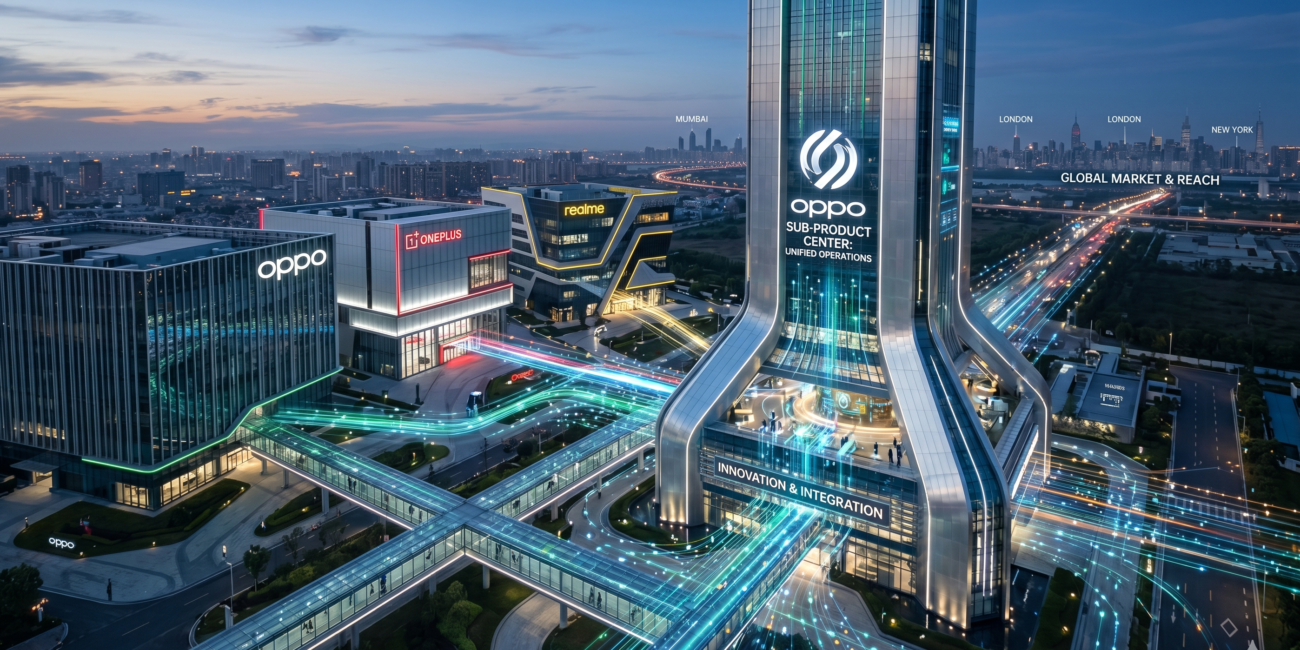
The restructuring involves the creation of a specialized sub-product center designed to act as the operational heart for both OnePlus and Realme. This new entity is not merely an administrative change but a fundamental shift in how these brands will approach product research, development, and global marketing. By bringing these once-separate pillars under one roof, Oppo aims to eliminate the internal competition that has occasionally seen its own brands cannibalizing each other’s market share. The move is widely viewed by industry analysts as a tactical response to the tightening global economy and the increasingly fierce competition from rival tech giants like Xiaomi and Samsung.
At the helm of this new business unit is Li Jie, who has served as the President of OnePlus China. His appointment to lead the sub-product center is a clear indicator of the high level of trust the parent company places in the OnePlus leadership philosophy. Li Jie will report directly to Pete Lau, the iconic co-founder of OnePlus who returned to Oppo several years ago to oversee product strategy for the entire group. This leadership structure ensures that while the brands might share resources, they will still benefit from the visionary product design that made OnePlus a household name among tech enthusiasts globally.
The integration of these brands is not an overnight occurrence but rather the culmination of a multi-year trend toward consolidation. OnePlus, which began its journey as an independent “flagship killer” startup, had already moved its research and development departments into Oppo’s facilities back in 2021. Realme, which started as a budget-focused series under Oppo before spinning off into its own independent company, has also been gradually drifting back toward its parent company’s ecosystem to leverage better supply chain advantages. By formalizing this merger now, Oppo is effectively creating a massive conglomerate that can negotiate better prices for components and streamline the manufacturing process for dozens of different smartphone models.
One of the primary drivers behind this merger is the need for operational efficiency in the post-pandemic market. In the past, OnePlus and Realme maintained separate marketing teams, distinct after-sales service networks, and independent logistics chains. This separation led to redundant spending and a fragmented customer experience. Under the new unified business unit, these functions are expected to merge. A consumer who buys a Realme phone in a rural area and a professional who purchases a premium OnePlus device in a major city may soon find themselves visiting the same service centers and benefiting from the same software updates and security patches, all powered by Oppo’s massive technical infrastructure.
The strategic synergy created by this merger is expected to be particularly potent in the Indian and European markets. In India, both OnePlus and Realme have built massive loyal followings, yet they often found themselves competing for the same customers in the mid-to-high-end price brackets. By coordinating their product launches through a single business unit, Oppo can ensure that a new Realme Pro model does not launch at the same time or the same price point as a new OnePlus Nord device. This “staggered” approach to the market will allow the group to cover every possible price point from entry-level to ultra-premium without any internal conflict.
There is also a significant technological advantage to this consolidation. Developing cutting-edge technologies like high-speed satellite connectivity, advanced under-display cameras, and foldable screen mechanisms requires billions of dollars in investment. When these brands were separate, they had to divide their budgets. Now, with a unified sub-product center, the cost of innovation is shared. A breakthrough in camera sensors developed for a flagship Oppo device can be more rapidly and efficiently adapted for a high-end OnePlus phone and eventually trickled down to a mid-range Realme device. This shared “innovation pool” will likely accelerate the speed at which new features reach the hands of consumers.
However, this merger does raise questions about the distinct brand identities that consumers have grown to love. OnePlus built its reputation on “Never Settle,” focusing on clean software and premium build quality for power users. Realme, on the other hand, focused on “Dare to Leap,” targeting Gen Z with flashy designs and high-specification hardware at aggressive prices. The challenge for the new consolidated unit will be to maintain these unique brand voices while sharing the same hardware foundations. Industry experts believe that Oppo will follow a “platform” strategy, similar to the automotive industry where different car brands share the same chassis and engine but look and feel completely different to the driver.
The timing of this announcement is also linked to recent leadership changes within the regional offices. The departure of key executives in India and other overseas territories has paved the way for a more centralized management style controlled from the headquarters in China. This centralization allows for quicker decision-making and a more cohesive global brand strategy. Rather than having regional offices fighting for their own localized goals, the entire group will now move in unison toward the broader objective of dominating the global smartphone rankings.
For the average consumer, the immediate effects of this merger might not be visible on the store shelves. You will likely still see the “OnePlus” and “Realme” logos on separate boxes. However, the software experience—OxygenOS and Realme UI—is expected to become even more closely aligned with Oppo’s ColorOS. This alignment is not necessarily a negative development; it often results in more stable software, faster bug fixes, and longer support cycles because the engineers only have to maintain one core codebase instead of three different ones.
Furthermore, the merger is a sign of the maturation of the smartphone industry. The days of dozens of small, independent brands competing for attention are fading, replaced by a few massive “mega-corps” that own multiple labels. By consolidating OnePlus and Realme, Oppo is positioning itself as a direct rival to the likes of the BBK sister-group (Vivo and IQOO) and the Xiaomi group (Redmi and Poco). This move ensures that Oppo remains a dominant force in the supply chain, commanding the respect of chipmakers like Qualcomm and MediaTek.
In conclusion, Oppo’s decision to merge OnePlus and Realme into a single business unit is a calculated gamble on the future of the mobile industry. It represents a shift away from the “independent startup” model and toward a sophisticated corporate structure that prioritizes efficiency, shared innovation, and market dominance. While the brands may keep their names, their hearts and minds are now officially united under the Oppo umbrella. As Li Jie and Pete Lau lead this new era, the tech world will be watching closely to see if this unified front can deliver the next generation of revolutionary mobile devices that the brands’ fans have come to expect. This consolidation is not just about saving costs; it is about building a tech ecosystem that is robust enough to lead the global market for the next decade.