




The Canvas Breach: Unpacking the Instructure Data Theft and the Looming Shadow of ShinyHunters
The educational technology sector has long been viewed as a high-value target for cybercriminals due to the sheer volume of sensitive personal data it manages. This reality hit home recently with the confirmation of a significant data breach at Instructure, the parent company of Canvas, which is arguably the most widely used Learning Management System (LMS) in the world. As students, educators, and administrators across the globe rely on Canvas for everything from daily assignments to high-stakes grading, news of a compromise has sent shockwaves through the academic community. The breach, claimed by the notorious threat actor group ShinyHunters, represents a complex intersection of corporate transparency, hacker hyperbole, and the inherent vulnerabilities of cloud-based educational infrastructure.
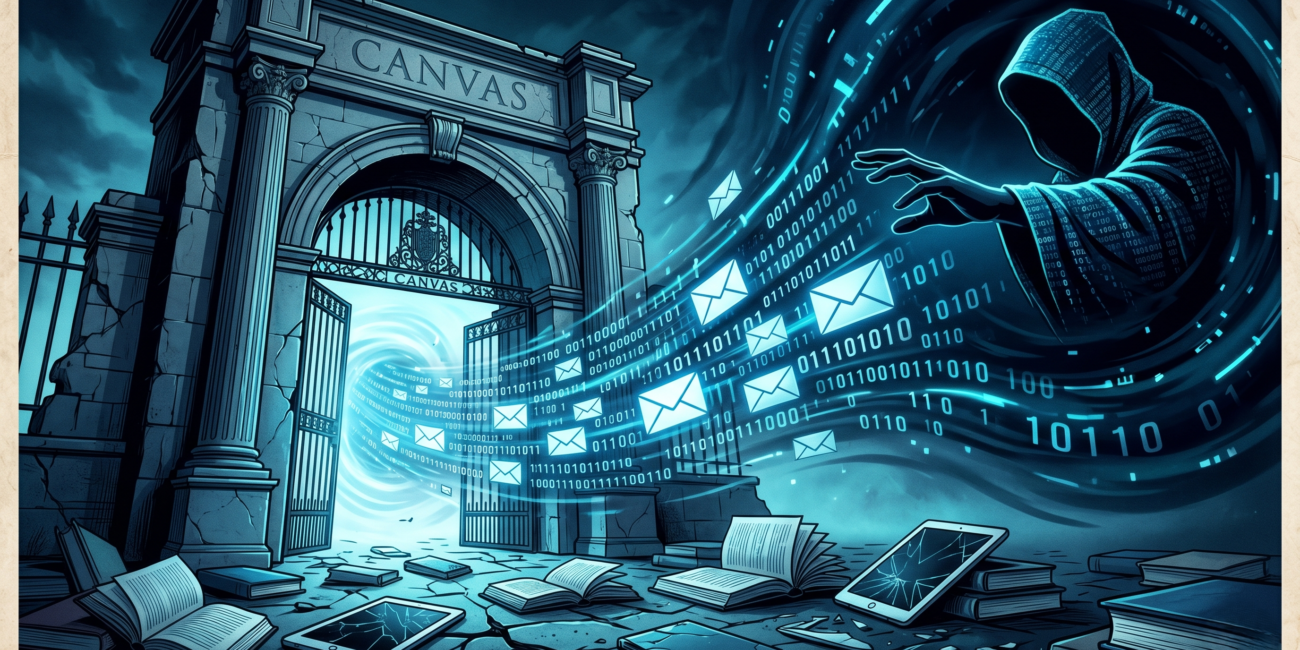
The incident first came to light when ShinyHunters, a group with a history of targeting massive corporations, posted an advertisement on a well-known hacking forum. They claimed to have successfully infiltrated Instructure’s systems and exfiltrated a massive trove of data. While initial reports were met with skepticism, Instructure eventually issued a formal statement confirming that an unauthorized third party had indeed gained access to a segment of their environment. This confirmation transformed the event from a dark-web rumor into a verified cybersecurity crisis, forcing the company to pivot into a state of active mitigation and forensic investigation.
The discrepancy between the company’s official narrative and the hackers’ claims is perhaps the most striking aspect of this story. According to Instructure’s preliminary findings, the breach was relatively contained. The company maintains that the data accessed was primarily limited to names, email addresses, student identification numbers, and internal messages sent through the platform. Crucially, Instructure has emphasized that their investigation has yet to find evidence of compromised passwords, social security numbers, financial records, or other highly sensitive personal identifiers. From the corporate perspective, while the breach is serious, it is a managed event that did not result in the total exposure of the most dangerous tiers of user data.
However, the perspective offered by ShinyHunters is far more dire. The threat actors claim to have made off with data belonging to over 275 million individuals, including students, teachers, and administrative staff. They further allege that this data pull covers nearly 9,000 schools and educational institutions spanning North America, Europe, and the Asia-Pacific region. The hackers specifically pointed to Instructure’s Salesforce instance as a primary source of the theft, suggesting they obtained billions of private records and internal communications. This massive gap in reporting—between Instructure’s “contained” incident and the hackers’ “global catastrophe”—is a classic hallmark of modern extortion. Threat actors frequently inflate numbers to increase the pressure on a company to pay a ransom, while companies often provide the most conservative estimate possible until forensic proof demands otherwise.
The technical mechanisms behind the breach appear to involve a vulnerability within the platform’s API or internal credentials. ShinyHunters claims to have exploited a specific weakness that allowed them to bypass traditional security perimeters. In response, Instructure acted swiftly to “rotate” application keys and deploy security patches intended to close the hole. This forced a massive logistical hurdle for educational institutions worldwide, as administrators were required to manually re-authorize API access and generate new keys to restore full functionality to their Canvas integrations. This process highlights the “domino effect” of EdTech breaches: when the central hub of a school’s digital ecosystem is compromised, every connected service—from grade books to third-party library tools—must be treated as potentially tainted.
To understand the severity of this threat, one must look at the pedigree of the attackers. ShinyHunters is not a novice group; they are seasoned professionals in the realm of data extortion. They have been linked to massive breaches at global giants like Ticketmaster, AT&T, and Santander Bank. Their involvement elevates the Instructure breach from a routine technical glitch to a targeted strike by one of the most effective data-theft syndicates in operation today. The group typically operates by stealing data and then threatening to leak it publicly unless a substantial cryptocurrency ransom is paid. Their strategy relies on the reputational damage a company suffers when millions of its users’ records are sold to the highest bidder on the dark web.
The implications for the victims—the students and teachers—are multifaceted. While Instructure claims passwords were not taken, the theft of email addresses and student IDs is a goldmine for secondary attacks. Armed with this information, cybercriminals can launch highly targeted phishing campaigns. A student might receive an email that looks exactly like an official Canvas notification, asking them to “re-verify” their password due to the recent breach. Because the email uses their real name and correct student ID, the victim is far more likely to click a malicious link, leading to a true account takeover. This “trickle-down” criminality means that the breach’s impact will likely be felt for months or years after the initial hole is patched.
Furthermore, the breach raises uncomfortable questions about the security of the “Global Classroom.” As schools shifted rapidly to remote and hybrid learning over the last few years, the adoption of tools like Canvas accelerated faster than many security protocols could keep up with. These platforms have become central repositories for the life of a student, containing not just grades, but personal communications, behavioral notes, and developmental records. When a single entity like Instructure dominates the market, it becomes a “single point of failure.” A breach at Instructure isn’t just a corporate problem for a company in Salt Lake City; it is a national security concern for the education systems of entire countries.
Instructure has been proactive in its communication since the confirmation, working alongside law enforcement and top-tier cybersecurity firms to determine the full extent of the damage. They have maintained a stance of transparency regarding their remediation efforts, including the rotation of credentials and the hardening of their cloud infrastructure. However, the shadow of the ShinyHunters claim continues to loom. Until a final forensic report is released, the true number of affected individuals remains a subject of intense debate.
For the broader EdTech industry, this incident serves as a grim reminder that no platform is too large to be hit. It underscores the necessity of “Zero Trust” architectures and the constant auditing of third-party integrations. For the schools and universities currently navigating the aftermath, the priority is clear: clear communication with parents and students, a mandatory reset of security tokens, and a heightened state of vigilance against phishing attempts. The Instructure breach is a landmark case in the ongoing war over digital privacy in education, proving that even as we build more advanced ways to learn, the methods used to exploit those systems are evolving just as quickly.
As the situation develops, the focus will shift toward the legal and regulatory fallout. With the General Data Protection Regulation (GDPR) in Europe and various student privacy laws in the United States, Instructure may face significant scrutiny regarding its data handling practices and the timeline of its disclosure. If the hackers’ claims of 275 million records turn out to be even partially true, this could become one of the largest data breaches in the history of the education sector, permanently altering how schools vet the software they use to teach the next generation. For now, the academic world remains on high alert, waiting to see if the data claimed by ShinyHunters begins to surface in the darker corners of the internet.