





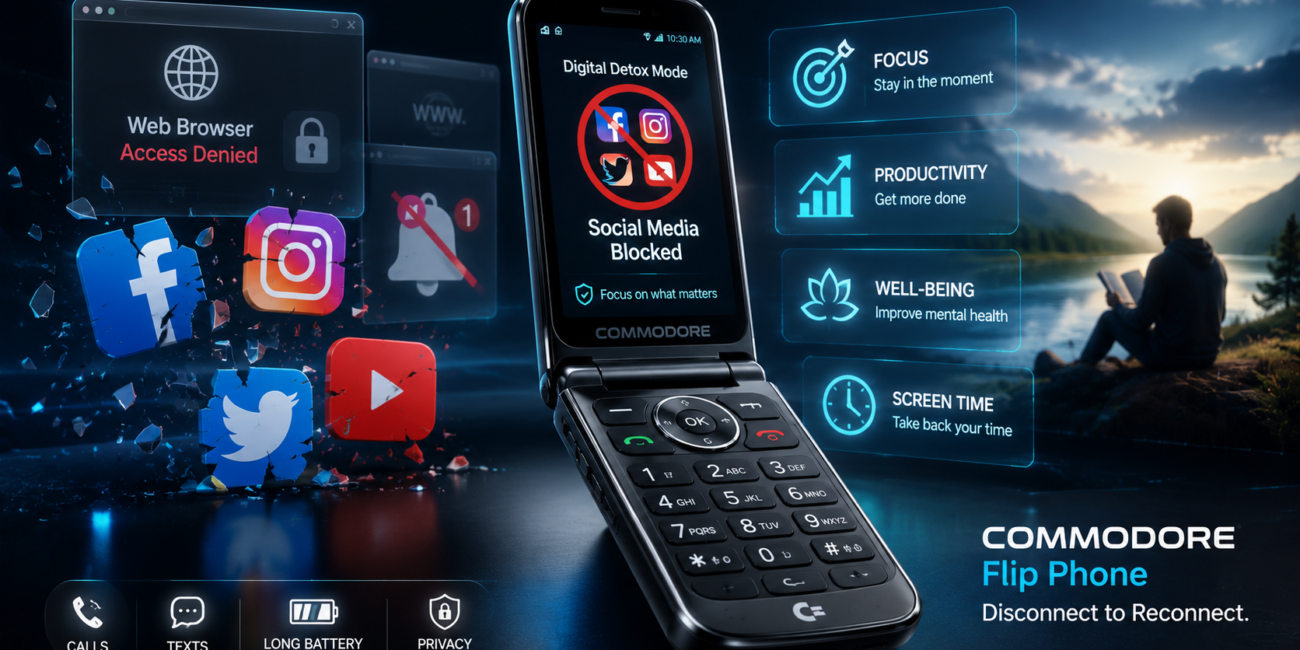
Commodore Unveils a New Flip Phone That Blocks Social Media and Web Browsing to Promote Digital Well-Being
Commodore Bets on Simplicity in an Age of Constant Connectivity
In a world where smartphones dominate everyday life and social media platforms compete relentlessly for user attention, Commodore is taking a dramatically different approach. The company has introduced a new flip phone designed specifically to reduce digital distractions by blocking social media applications and web browsers. Rather than encouraging users to spend more time online, the device aims to help people disconnect from the endless cycle of notifications, scrolling, and digital engagement that has become a defining feature of modern technology.
The launch comes at a time when concerns about screen addiction, mental health, and excessive smartphone usage are becoming increasingly common. While most technology companies continue to focus on adding new features, larger displays, and AI-powered experiences, Commodore’s latest device embraces simplicity. The company believes that many consumers are searching for a healthier relationship with technology and are willing to sacrifice certain conveniences in exchange for greater focus and peace of mind.
The announcement has sparked widespread discussion across the technology industry, with some praising the concept as a refreshing alternative to today’s smartphone culture while others question whether consumers are truly ready to abandon the digital services they rely on every day.
A Phone Designed to Eliminate Digital Distractions
Unlike traditional smartphones that provide access to thousands of applications and unlimited online content, Commodore’s new flip phone has been intentionally designed with restrictions in mind. The device reportedly blocks social media platforms and prevents users from accessing internet browsers, removing two of the biggest sources of digital distraction.
The philosophy behind the product is simple. Instead of encouraging endless scrolling through feeds, videos, and online content, the phone focuses on essential communication functions. Users can make phone calls, send text messages, and stay connected with friends and family without being constantly pulled into the online world.
This approach reflects a growing concern among technology experts and consumers about the impact of social media on productivity, mental well-being, and overall quality of life. Numerous studies have highlighted the effects of excessive screen time, leading many people to reconsider how they interact with technology throughout the day.
Commodore appears to be targeting these concerns directly by creating a device that limits temptation rather than relying on users to manage distractions themselves.
The Rise of the Digital Detox Movement
The launch of Commodore’s new flip phone is closely tied to a broader trend known as digital detox. Over the past several years, an increasing number of consumers have begun seeking ways to reduce their dependence on smartphones and social media platforms.
For many people, smartphones have become indispensable tools that serve as cameras, navigation devices, entertainment centers, communication platforms, and productivity hubs. However, this convenience has also created challenges. Constant notifications, social media updates, and online content streams can make it difficult for users to focus on work, studies, relationships, and personal well-being.
As awareness of these issues grows, interest in digital minimalism has expanded. Books, podcasts, wellness programs, and productivity experts frequently discuss strategies for reducing screen time and regaining control over digital habits. Commodore’s latest device appears to align directly with this movement by offering a hardware solution rather than relying solely on self-discipline.
The concept may appeal particularly to consumers who have attempted to reduce their smartphone usage but struggled to maintain those habits over time.
A Return to the Classic Flip Phone Experience
The new device also represents a return to a form factor that many consumers remember fondly. Before smartphones became dominant, flip phones were among the most popular mobile devices in the world. Their compact design, physical keypads, and long battery life made them practical and reliable communication tools.
Commodore’s latest offering embraces many of these traditional characteristics. The flip phone design creates a sense of nostalgia while also providing functional benefits. Physical buttons can make texting and navigation more straightforward for some users, and the simpler software experience often contributes to improved battery performance.
Many consumers who feel overwhelmed by modern smartphones may find comfort in a device that prioritizes simplicity over complexity. The familiar flip-phone design reinforces the product’s message that communication should remain the primary purpose of a mobile device.
This nostalgic appeal could become an important part of the phone’s marketing strategy, particularly among older consumers who used flip phones before the smartphone revolution transformed the mobile industry.
A Different Approach to Mobile Technology
What makes Commodore’s new device particularly interesting is that it challenges many assumptions about technological progress. For years, innovation in the smartphone industry has largely been measured by the number of features companies can add to their devices. Manufacturers compete to offer better cameras, larger displays, faster processors, advanced AI capabilities, and increasingly sophisticated software ecosystems.
Commodore has chosen a different path. Instead of asking how many features can be added, the company is asking which features can be removed to create a better user experience.
This philosophy may seem counterintuitive in an industry that typically celebrates greater functionality. However, it reflects a growing belief that more technology does not always lead to a better quality of life. For some users, fewer distractions and greater focus may be more valuable than unlimited access to digital services.
The phone’s restricted functionality is not presented as a limitation but rather as a feature designed to promote healthier technology habits.
Potential Benefits for Modern Consumers
Advocates of digital minimalism argue that reducing smartphone dependence can lead to numerous benefits. By eliminating easy access to social media and web browsing, users may find it easier to concentrate on important tasks and spend more time engaging in real-world activities.
Many professionals struggle with workplace distractions caused by smartphones. Constant notifications and social media updates can interrupt concentration and reduce productivity throughout the day. A device focused solely on communication could help users remain more engaged with their work.
Students may also benefit from fewer digital distractions. Educational experts frequently emphasize the importance of maintaining focus while studying, and social media has often been identified as a significant source of interruption.
Parents represent another important audience. Many families are increasingly concerned about children’s exposure to social media platforms and online content. A phone that provides communication capabilities without unrestricted internet access could offer a safer alternative for younger users.
The device may also appeal to individuals who simply want greater control over their relationship with technology.
Challenges Facing the Device
Despite its unique concept, Commodore’s new flip phone is likely to face significant challenges. Modern consumers have become deeply dependent on smartphone functionality, and many everyday activities now require internet-connected devices.
Navigation, mobile banking, ride-sharing services, digital payments, workplace communication tools, and messaging applications have become essential parts of daily life for millions of people. Removing access to these services may create inconveniences that some users find difficult to accept.
As a result, the phone may be more successful as a secondary device rather than a complete smartphone replacement. Some consumers could choose to use it during work hours, vacations, or specific periods when they want to reduce digital distractions while maintaining a separate smartphone for other tasks.
The product’s success may ultimately depend on whether enough consumers are willing to prioritize simplicity over convenience.
A Reflection of Changing Consumer Priorities
Regardless of its commercial performance, Commodore’s new flip phone highlights an important shift in consumer attitudes toward technology. For decades, the industry has focused on increasing connectivity and expanding digital experiences. Today, a growing number of consumers are asking whether constant connectivity is always beneficial.
The popularity of digital wellness tools, screen-time tracking features, and mindfulness applications suggests that people are becoming more conscious of how technology affects their lives. Commodore’s latest device takes that idea one step further by removing many of the distractions entirely.
Whether the phone becomes a mainstream success or remains a niche product, it represents a notable response to concerns about digital overload.
Looking Ahead
The launch of Commodore’s social-media-blocking flip phone arrives at a fascinating moment in the evolution of consumer technology. As artificial intelligence, immersive digital experiences, and increasingly powerful smartphones continue to shape the future, a growing number of users are searching for ways to simplify their digital lives.
By introducing a device that prioritizes communication over consumption, Commodore is challenging conventional assumptions about what a modern phone should be. The company is betting that many consumers are ready for a more balanced relationship with technology.
As discussions around digital well-being continue to grow, Commodore’s latest release may become one of the most interesting examples of how the technology industry is adapting to changing consumer priorities. Whether it sparks a broader movement or remains a niche alternative, the device demonstrates that sometimes innovation is not about adding more features—it is about knowing which ones to leave behind.