





Google’s New Photos Update Sparks Privacy Debate as AI Scanning Expands
Introduction: A Major Shift in How Your Photos Are Used
In April 2026, Google rolled out a significant update to its widely used Google Photos platform, quietly introducing a deeper level of artificial intelligence integration that is already raising eyebrows across the tech world. The update allows Google’s AI systems, powered by its latest Gemini technology, to scan, analyze, and interpret users’ entire photo libraries with greater depth than ever before.
While the company presents this as a leap forward in convenience and personalization, critics argue that it marks another step toward increased digital surveillance. As billions of users rely on Google Photos to store their memories, this update has triggered an urgent conversation about privacy, data ownership, and the true cost of AI-powered convenience.
What the Update Actually Does
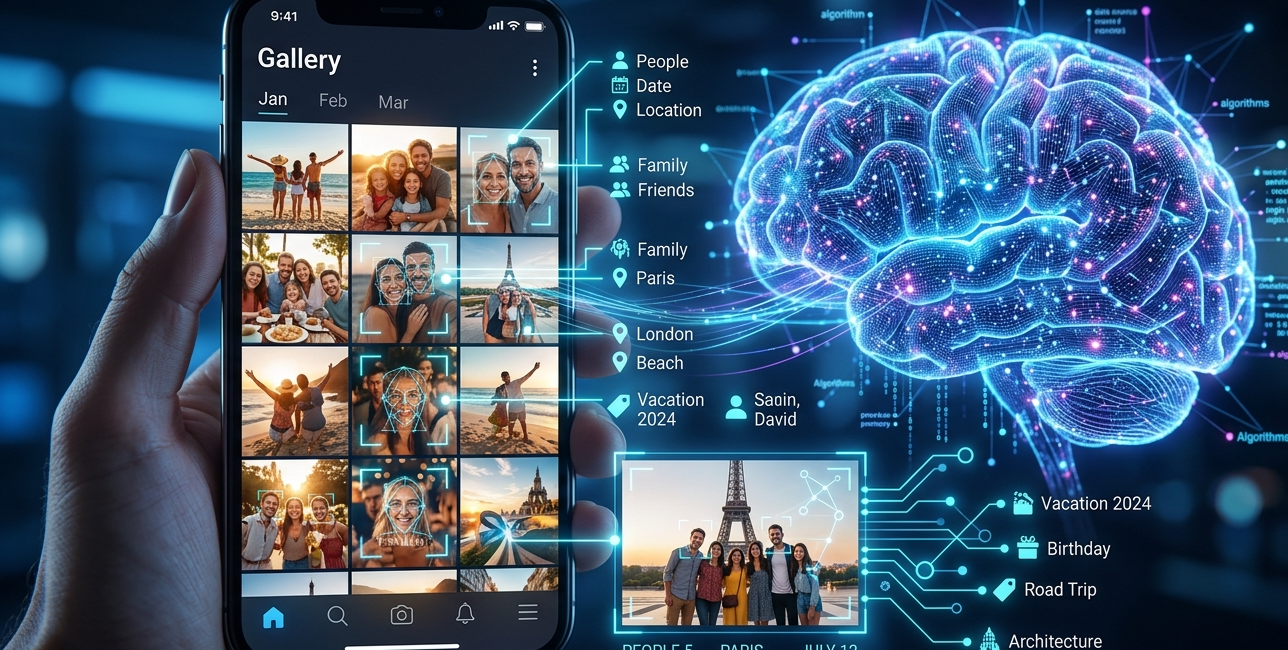
At its core, the new update enhances Google Photos’ ability to understand the content of images. This goes far beyond basic categorization. The AI can now identify not just objects or faces, but relationships, events, and contextual details within photos.
For example, instead of simply recognizing a “person” or a “beach,” the system can interpret a photo as “a family vacation with your parents at a coastal location.” It can connect multiple images across time, building a narrative of your personal life.
This deeper level of understanding allows Google to offer more advanced features. Users can search their photo libraries using natural language queries, such as looking for specific moments, people, or experiences. Albums can be generated automatically with more accuracy, and memories can be curated in ways that feel almost human.
The technology essentially transforms a static collection of images into a dynamic, searchable, and context-aware archive of a person’s life.
The Role of AI and Gemini Integration
The update is closely tied to Google’s broader push into generative AI, particularly through its Gemini platform. By integrating Gemini into Google Photos, the company is positioning its ecosystem to become more intelligent and interconnected.
Photos are no longer just images; they become data points that feed into a larger AI system. This system can potentially interact with other Google services, enhancing personalization across search, recommendations, and digital assistants.
For instance, your photo history could influence travel suggestions, reminders, or even how your digital assistant responds to personal queries. The goal is to create a seamless experience where AI understands not just your preferences, but your life experiences.
However, this level of integration is precisely what concerns privacy advocates.
Why Privacy Experts Are Concerned
The main issue is not that Google is analyzing photos—this has been happening for years. The concern lies in how much more sophisticated and intrusive that analysis is becoming.
By interpreting relationships, habits, and personal moments, the AI is effectively building a detailed profile of users’ lives. This raises questions about how that data is stored, who has access to it, and how it might be used in the future.
Even if Google maintains that the processing is secure or partially done on-device, the scale and depth of analysis create new risks. Users may not fully understand what they are consenting to when they accept updated terms or enable new features.
There is also the broader concern of data being used to improve AI models. While companies often anonymize data, the line between anonymized and identifiable information can sometimes blur, especially when dealing with highly personal content like photos.
Is This Really New or Just an Evolution?
It is important to note that Google Photos has long included features such as facial recognition, object detection, and location tagging. Users have grown accustomed to searching for images by typing keywords like “dog,” “birthday,” or “mountains.”
What has changed is the level of intelligence behind these features. The new update represents an evolution from simple recognition to deeper understanding. The AI is no longer just identifying elements within an image; it is interpreting meaning and context.
This shift may seem subtle, but it has significant implications. It moves the technology closer to human-like perception, where images are not just seen but understood.
The Convenience Factor: Why Many Users May Welcome It
Despite the concerns, there is no denying that the update offers tangible benefits. For many users, the ability to instantly find specific memories or create meaningful collections of photos is incredibly appealing.
The technology reduces the need for manual organization, saving time and effort. It can bring forgotten moments back to life, creating a more engaging and emotional experience.
For families, travelers, and content creators, these features can be particularly useful. The AI can highlight important events, group related images, and even suggest edits or enhancements.
In a world where people capture thousands of photos each year, having an intelligent system to manage and interpret those images can feel like a necessity rather than a luxury.
The Trade-Off: Personalization vs Privacy
The situation ultimately comes down to a trade-off. Users are being asked, implicitly or explicitly, to exchange a degree of privacy for enhanced functionality.
This is not unique to Google. Many tech companies operate on a similar model, using data to power personalized experiences. However, the intimacy of photo data makes this case especially sensitive.
Photos often contain some of the most personal aspects of a person’s life—family members, private moments, locations, and emotional experiences. When AI systems analyze this data at scale, the stakes are significantly higher.
Users must decide whether the benefits outweigh the risks, and whether they trust the company to handle their data responsibly.
User Control and Transparency
One of the key issues highlighted by critics is the level of control users actually have. While Google typically provides settings and options to manage privacy, these controls can sometimes be difficult to navigate or fully understand.
Some features may be enabled by default, requiring users to actively opt out. Others may be presented in ways that encourage acceptance without fully explaining the implications.
Transparency becomes crucial in this context. Users need clear, accessible information about what is being analyzed, how it is used, and how they can limit or disable certain functions.
Without this transparency, even well-intentioned features can erode trust.
The Bigger Picture: AI and the Future of Personal Data
This update is part of a broader trend in the tech industry. As AI becomes more advanced, companies are finding new ways to leverage personal data to improve their systems.
Photos, in particular, are a rich source of information. They capture not just what people do, but who they are, where they go, and how they live.
The integration of AI into everyday tools like photo storage signals a future where digital systems have an increasingly detailed understanding of human life. This could lead to more intuitive and helpful technology, but it also raises fundamental questions about privacy and autonomy.
Society is still grappling with how to balance innovation with ethical considerations. Updates like this bring those questions into sharper focus.
Conclusion: A Turning Point for Users
Google’s latest update to Google Photos represents more than just a feature upgrade. It marks a turning point in how personal data is used and understood by AI systems.
For users, the decision is not simply whether to use a new feature, but whether to embrace a new level of interaction between their private lives and digital technology.
The convenience is undeniable, and for many, it will enhance the way they experience their memories. But the concerns are equally real, and they deserve careful consideration.
As AI continues to evolve, users will need to stay informed and proactive, ensuring that they remain in control of their data in an increasingly connected world.

Other Articles