




Google Unveils AI-Powered “Googlebook” Laptops To Replace Traditional Chromebook Experience
Google has officially introduced a brand-new category of AI-focused laptops called “Googlebook,” signaling what could become the company’s biggest transformation in personal computing since the launch of Chromebooks. Announced during the Android Show: I/O Edition 2026 event, Googlebook represents Google’s ambitious vision for the future of laptops, where artificial intelligence becomes deeply integrated into every part of the user experience.
The announcement has immediately generated major attention across the technology industry because Googlebook is not simply another Chromebook refresh. Instead, Google appears to be creating an entirely new computing ecosystem centered around Gemini AI, Android integration, and intelligent workflows designed to compete directly with Apple MacBooks and Microsoft’s growing lineup of AI-powered Windows PCs.
Google describes Googlebook as the next evolution of computing, built specifically for the era of AI-first experiences. While traditional laptops are designed around operating systems and applications, Google says Googlebook shifts the focus toward intelligence systems powered by Gemini AI. This means the laptop is designed to understand context, assist users proactively, and transform how tasks are performed across productivity, creativity, communication, and entertainment.
At the core of Googlebook is a new Android-centered operating system internally known as “Aluminium” or “Aluminium OS.” The platform combines technologies from Android, ChromeOS, and the Chrome browser into a single ecosystem that aims to deliver a more seamless and intelligent laptop experience. Although Google has not officially confirmed whether Aluminium will remain the final commercial branding, the company made it clear that this operating system represents a major strategic direction for future Google devices.
Unlike traditional ChromeOS systems that primarily focused on web-based computing, Googlebook is being designed as a fully integrated AI-native platform. Users will be able to run Android applications directly, access advanced Chrome browser functionality, and interact with Gemini-powered features built deeply into the system itself.
One of the most important announcements during the reveal was Google’s clarification that Chromebooks are not disappearing immediately. Existing Chromebook devices, particularly models released after 2021, will continue receiving software and security updates for up to 10 years. However, Googlebook clearly appears to be positioned as Google’s long-term premium computing strategy moving forward.
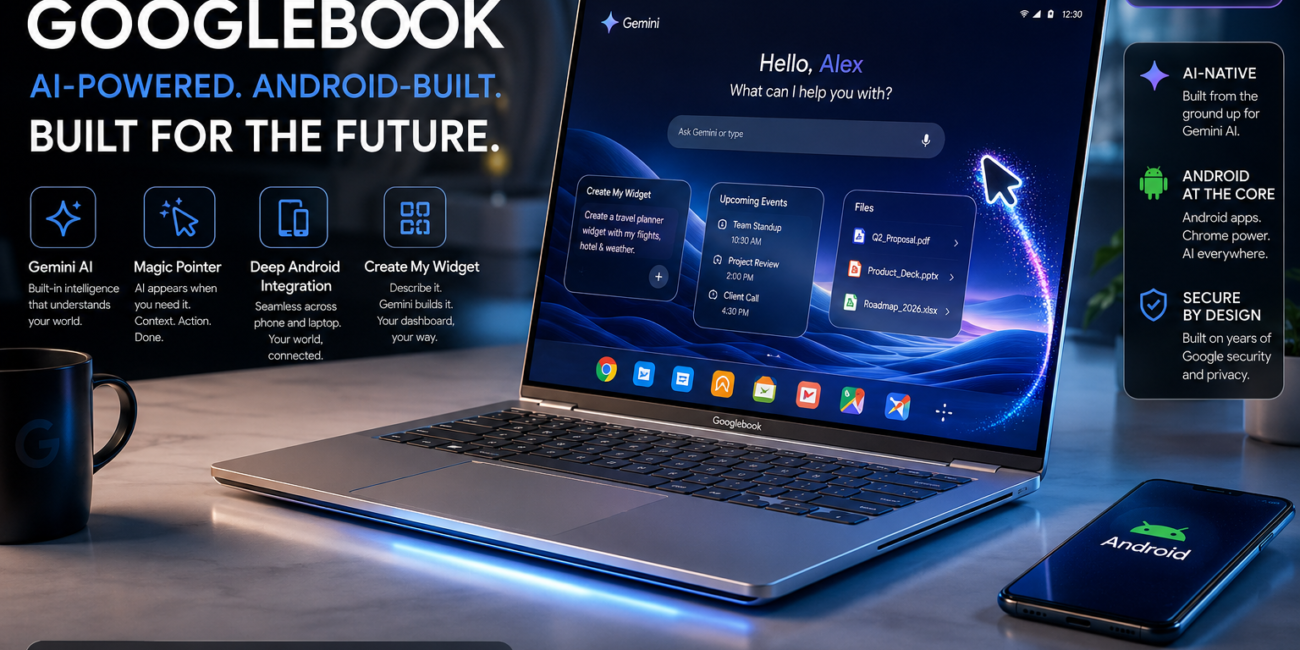
Perhaps the most talked-about feature introduced alongside Googlebook is a new AI-powered system called “Magic Pointer.” Developed in collaboration with Google DeepMind, Magic Pointer transforms the traditional computer cursor into an intelligent assistant capable of understanding on-screen context and responding proactively to user behavior.
When users wiggle the cursor, Gemini AI appears automatically and begins offering contextual actions based on what is currently visible on the screen. During demonstrations, Google showed examples where hovering over a date inside an email instantly generated meeting scheduling options. In another example, selecting two separate images allowed Gemini AI to create comparisons, combinations, or entirely new visual concepts based on the selected content.
Google says Magic Pointer is designed to eliminate friction between users and AI assistance by making intelligence feel naturally integrated into the computing experience rather than existing as a separate chatbot or application window. Industry analysts believe this could become one of the defining features that separates Googlebook from traditional laptops.
Another major focus of Googlebook is deep Android ecosystem integration. Google is positioning the laptops as the perfect companion devices for Android smartphones. Users will be able to access phone applications directly on their Googlebook devices, sync files seamlessly between products, and continue workflows across multiple devices with minimal interruption.
This cross-device functionality reflects Google’s larger effort to create a stronger ecosystem experience similar to what Apple offers between MacBooks and iPhones. By strengthening continuity between Android phones and Googlebook laptops, Google hopes to improve productivity while also encouraging greater loyalty within its hardware and software ecosystem.
Googlebook also introduces a new AI-powered personalization system called “Create My Widget.” The feature allows users to generate custom widgets simply by describing what they want using natural language prompts. Instead of manually configuring dashboards or layouts, users can ask Gemini AI to create widgets that pull information from Google apps, online services, calendars, emails, tasks, and web content automatically.
For example, users may request widgets that combine weather updates, upcoming meetings, unread emails, productivity tasks, and travel information into a single intelligent dashboard. Google says the feature will eventually expand beyond Googlebook and become available across Android and Wear OS devices as well.
The company also revealed that Googlebook laptops will feature premium hardware designs intended to compete directly with high-end laptops in the market. Devices are expected to include thin aluminium chassis, lightweight builds, modern minimalist aesthetics, and advanced materials focused on portability and performance.
One particularly eye-catching design element shown during previews was a glowing “Glowbar” lighting strip integrated into the hardware. This feature appears to function as both a visual branding element and a status indicator for AI activity and notifications. The premium design direction suggests Google is intentionally targeting the same market segment dominated by Apple MacBooks and premium Windows ultrabooks.
To support the launch of the platform, Google confirmed partnerships with several major hardware manufacturers including Acer, Asus, Dell, HP, and Lenovo. These companies will produce the first wave of Googlebook devices expected to arrive in Fall 2026. By partnering with established laptop brands, Google is attempting to accelerate adoption while offering consumers a variety of hardware options across multiple price segments.
The launch of Googlebook comes during an intense period of competition within the AI PC market. Microsoft has heavily invested in Copilot+ PCs powered by AI acceleration hardware, while Apple continues integrating AI-powered experiences into macOS and its Apple Silicon ecosystem. Googlebook represents Google’s strongest response yet to this growing trend toward AI-native computing platforms.
Unlike previous AI assistants that existed mainly through browser windows or mobile apps, Googlebook aims to make AI an invisible but constantly active layer across the entire operating system. Google believes this approach will fundamentally change how users interact with their devices by reducing the need for manual searching, repetitive actions, and complex workflows.
The announcement has already triggered widespread reactions across social media and technology communities. Many users expressed excitement about finally seeing a serious Android-focused laptop ecosystem that offers deeper integration with mobile devices. Others praised the potential productivity improvements enabled by Gemini AI and contextual computing features.
However, not all reactions have been positive. Some critics questioned the “Googlebook” branding, arguing that the name feels too similar to existing products like MacBook and Chromebook. Others expressed concerns about Google placing too much emphasis on AI-driven experiences and reducing traditional user control over workflows.
There are also ongoing discussions about whether Googlebook could eventually replace ChromeOS entirely. While Google insists Chromebooks will continue receiving support, many industry observers believe Googlebook represents the beginning of a larger transition toward AI-first computing environments that gradually move beyond traditional operating systems.
Privacy advocates have also raised questions regarding how deeply integrated AI systems will process user data and contextual information. Since many Googlebook features rely heavily on real-time understanding of user behavior and screen content, some users remain cautious about the long-term implications of such AI-powered operating systems.
Despite these concerns, Googlebook clearly represents one of Google’s most ambitious hardware and software projects in years. The company is no longer positioning itself simply as a provider of cloud services, search engines, or mobile software. Instead, Google is now attempting to define the next generation of personal computing through AI-native devices deeply integrated into its ecosystem.
The timing of the announcement is also important because the broader technology industry is rapidly shifting toward AI-driven platforms. Companies are racing to determine how artificial intelligence will reshape personal computing over the next decade, and Googlebook appears to be Google’s answer to that future.
By combining Gemini AI, Android integration, contextual computing, premium hardware, and intelligent personalization, Googlebook could significantly influence how future laptops are designed and used. Whether consumers fully embrace AI-first laptops remains uncertain, but Google has made it clear that it sees intelligent systems — not traditional operating systems — as the future of computing.
As the first Googlebook devices prepare for launch in Fall 2026, the technology industry will closely watch whether Google can successfully transform AI from a feature into the foundation of the entire laptop experience. If successful, Googlebook could become one of the most important shifts in personal computing since the rise of modern smartphones and cloud-based ecosystems.