




Morocco Edge Netherlands in Penalty Shootout to Reach FIFA World Cup Round of 16
Atlas Lions Hold Their Nerve from the Spot as Another Memorable World Cup Victory Extends Their Remarkable Rise
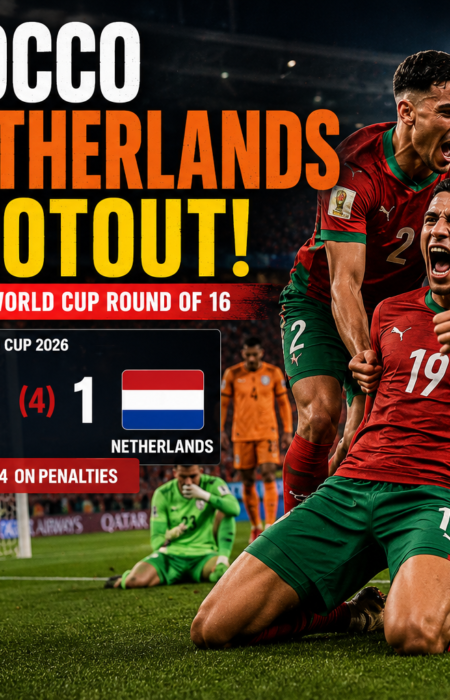
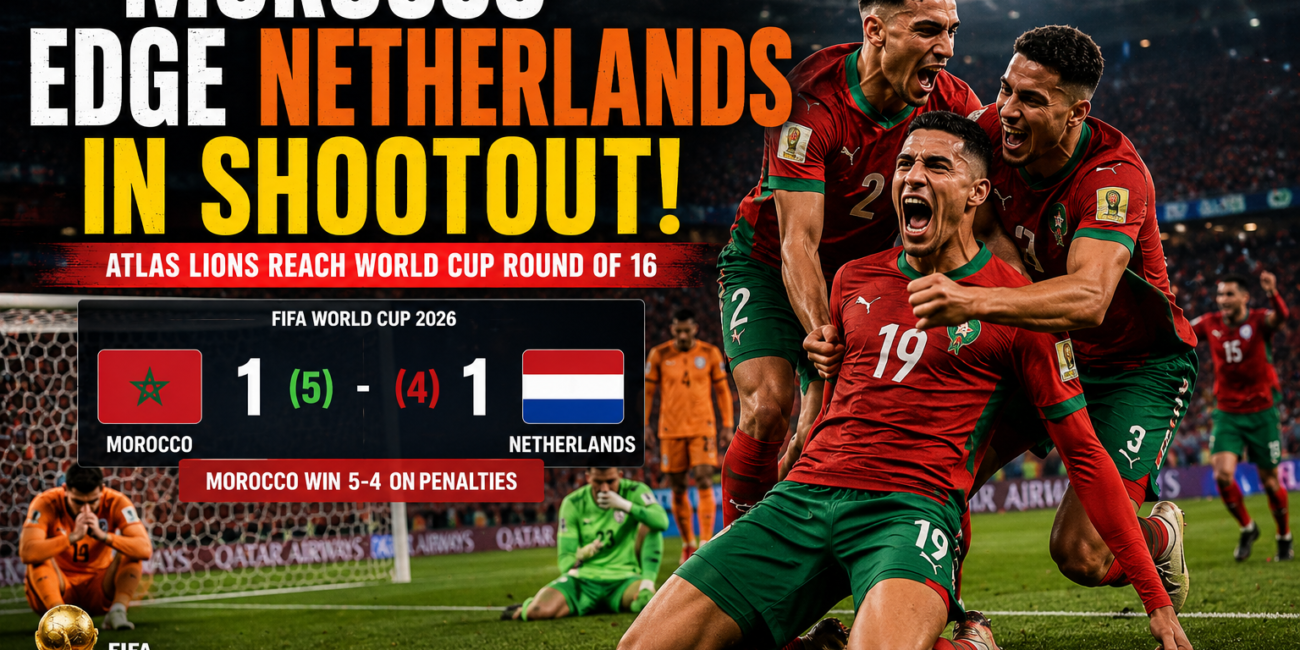
Morocco continued their impressive rise on the international stage by defeating the Netherlands in a dramatic penalty shootout to secure a place in the Round of 16 of the 2026 FIFA World Cup. After an intense contest finished 1-1 following extra time, the Atlas Lions displayed remarkable composure from the penalty spot to eliminate one of Europe’s traditional football powers and keep their World Cup dream alive.
The victory represents another landmark moment for Moroccan football. Having earned worldwide admiration with their historic run at the 2022 FIFA World Cup, the North African nation has once again demonstrated that it belongs among the elite teams competing on football’s biggest stage. Their disciplined defending, tactical organization, and confidence under pressure proved decisive against a Dutch side that arrived with high expectations.
For the Netherlands, the defeat brings an abrupt end to a campaign that promised much but ultimately fell short. Despite enjoying long spells of possession and taking an early lead, the Dutch were unable to maintain their advantage as Morocco gradually took control of key moments in the match.
The opening stages reflected the contrasting styles of the two teams. The Netherlands looked comfortable in possession, patiently building attacks from the back and attempting to stretch Morocco’s defensive shape through quick passing and movement. Their midfield dictated the tempo, allowing the Dutch to spend extended periods inside the Moroccan half.
That early pressure produced a breakthrough in the first half when Xavi Simons found the back of the net after a well-worked attacking move. The goal rewarded the Netherlands for their positive start and appeared to place them in a strong position to control the remainder of the contest.
Morocco, however, refused to panic. Rather than abandoning their disciplined defensive structure, they continued to defend with patience while waiting for opportunities to launch quick attacks whenever possession was regained. Their calm approach prevented the match from becoming one-sided and ensured they remained within striking distance.
As the second half unfolded, Morocco grew increasingly confident. Their midfield began winning more second balls, while their wide players found greater success carrying the ball into dangerous areas. The shift in momentum gradually placed greater pressure on the Dutch defense, forcing the Netherlands to spend more time protecting their lead than extending it.
The equalizing goal eventually arrived through Youssef En-Nesyri, whose aerial ability once again proved invaluable for Morocco. Rising above defenders inside the penalty area, he powered a header beyond the goalkeeper to level the score and ignite celebrations among Moroccan supporters.
The goal transformed the atmosphere inside the stadium. Confidence surged through the Moroccan squad, while the Netherlands suddenly found themselves searching for answers after seeing their advantage disappear. From that moment onward, both teams sensed that a single mistake could determine the outcome of the match.
Normal time ended with the score still level despite several promising attacks from both sides. The Netherlands attempted to regain control through sustained possession, but Morocco’s compact defensive organization made it increasingly difficult to create clear scoring opportunities. At the opposite end, Morocco continued to threaten through rapid transitions and set-piece situations.
Extra time produced another fascinating tactical battle. Physical fatigue began to influence the pace of the game, yet neither side abandoned its determination to find a winning goal before penalties. Players from both teams demonstrated impressive commitment, covering every blade of grass despite more than ninety minutes of intense football already behind them.
Morocco’s defensive unit remained disciplined throughout the additional thirty minutes, frustrating the Dutch attack with timely interceptions, strong aerial defending, and intelligent positioning. Every clearance and blocked shot was greeted enthusiastically by the Moroccan supporters, whose belief continued to grow with each passing minute.
The Netherlands also defended resolutely whenever Morocco threatened, ensuring the match remained finely balanced until the final whistle of extra time confirmed that penalties would decide which nation progressed.
Penalty shootouts often produce unforgettable moments in World Cup history, and this contest was no exception. The pressure was immense as players from both teams prepared to take the long walk from the halfway line to the penalty spot.
Morocco approached the shootout with impressive composure. Each penalty was taken with confidence, reflecting the team’s preparation and mental strength. Their players displayed remarkable calm despite the enormous stakes, converting every opportunity from the spot and placing relentless pressure on their opponents.
The Netherlands, meanwhile, could not maintain the same flawless standard. A missed penalty proved decisive, handing Morocco the advantage they needed to seize control of the shootout. Once that opportunity slipped away, the momentum shifted entirely toward the Atlas Lions.
When Morocco converted the winning penalty, celebrations erupted both on the pitch and in the stands. Players embraced one another, coaching staff rushed onto the field, and supporters celebrated another historic achievement for a national team that continues to inspire football fans around the world.
One of the standout performers throughout the evening was goalkeeper Bono. Already recognized internationally for his calm presence and ability to perform in high-pressure situations, he once again delivered an influential display. His command of the penalty area, confident handling, and leadership from the back gave Morocco stability throughout the contest.
During the shootout, Bono’s experience and composure added further confidence to his teammates. Even before the decisive miss by the Netherlands, his presence created uncertainty for opposing penalty takers and reinforced Morocco’s belief that victory was within reach.
Youssef En-Nesyri also played a crucial role in Morocco’s success. His equalizing goal shifted momentum at a critical stage of the match, while his constant movement and aerial strength kept the Dutch defense under pressure whenever Morocco attacked.
Beyond individual performances, Morocco’s greatest strength was arguably their collective discipline. Every player contributed defensively, tracked back when required, and remained committed to the tactical plan throughout 120 demanding minutes. Their teamwork demonstrated why they have become one of the most difficult teams to break down in international football.
For the Netherlands, the defeat will be difficult to accept. The Dutch began brightly, controlled possession for long periods, and created enough opportunities to believe they could secure victory before penalties became necessary. However, their inability to convert additional chances allowed Morocco to remain in the contest.
Once Morocco equalized, the balance of the match changed considerably. Although the Netherlands continued to enjoy possession, they struggled to produce the same level of attacking threat that had characterized their first-half performance. As the game progressed, Morocco appeared increasingly comfortable with the tactical battle unfolding around them.
The result also highlights the growing competitiveness of international football. Traditional football powers can no longer rely solely on reputation or historical success, as emerging nations continue to close the gap through improved coaching, tactical preparation, and player development.
Morocco’s journey serves as a perfect example of this evolution. Their achievements are no longer viewed as isolated surprises but as evidence of sustained progress within the country’s football program. Successive strong performances on the world stage have established Morocco as a genuine contender capable of challenging any opponent.
With qualification secured, Morocco now advances to the Round of 16 carrying significant momentum and confidence. Their defensive resilience, tactical discipline, and ability to thrive under pressure make them a dangerous opponent for any team remaining in the tournament.
For the Netherlands, attention will soon shift toward evaluating what went wrong and preparing for future international competitions. While the squad possesses considerable talent, another painful knockout-stage exit will inevitably lead to reflection over missed opportunities and areas requiring improvement.
As the 2026 FIFA World Cup continues to produce unforgettable matches, Morocco’s dramatic victory over the Netherlands will stand out as one of the competition’s defining moments. It was a performance built on resilience, belief, and composure under immense pressure—qualities that have become synonymous with this Moroccan side. Their celebration at the final whistle reflected not only the joy of reaching the next round but also the growing confidence of a team that believes its World Cup journey may still have many memorable chapters to write.