




The Architecture of Autonomy: How the Framework Laptop 13 Pro is Dismantling the Industry’s “Sealed Box” Philosophy
The high-end laptop market has spent the better part of the last decade moving toward a singular, restrictive destination: the disposable luxury item. For years, the prevailing wisdom from industry titans was that premium aesthetics, rigidity, and “all-day” battery life necessitated a closed ecosystem where every internal component—from memory to processors—was soldered permanently into place. However, the announcement of the Framework Laptop 13 Pro on April 21, 2026, marks a definitive structural pivot. This device does more than just offer a powerful alternative for the “prosumer” market; it serves as a technical and philosophical rebuttal to the era of planned obsolescence, proving that hardware freedom and professional-grade performance are no longer mutually exclusive.
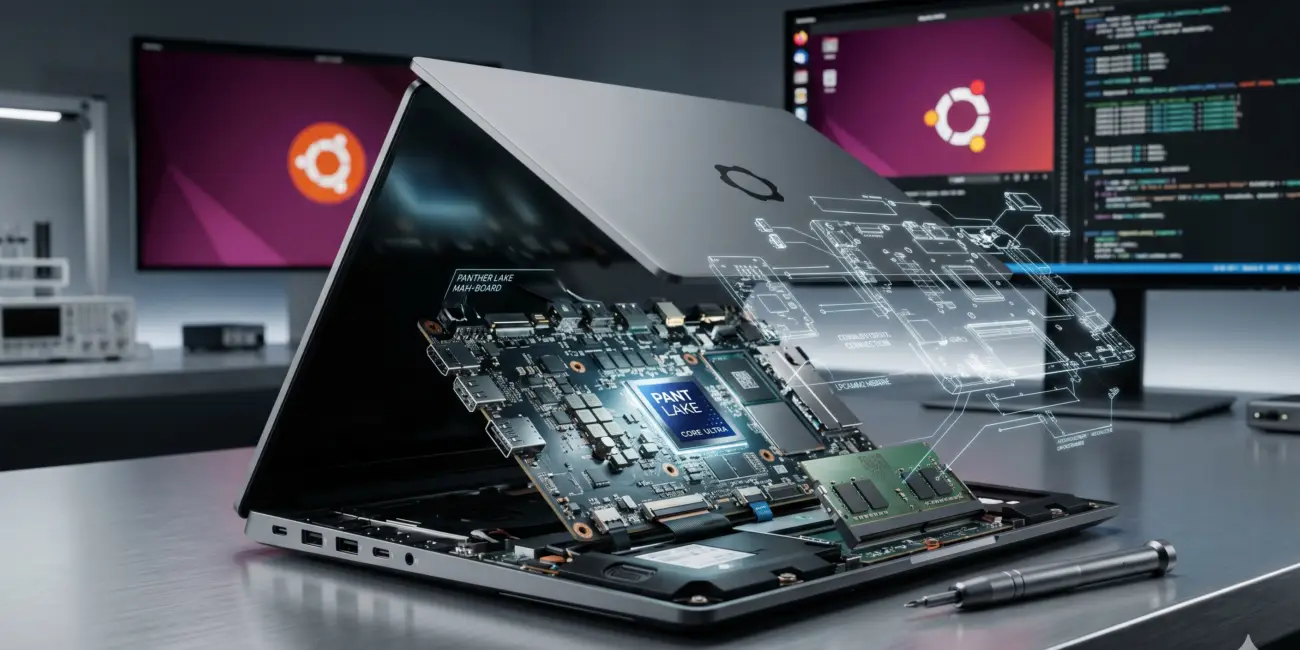
The centerpiece of this technological shift is the transition from the “black box” design to a truly modular platform. While previous attempts at modular laptops often resulted in bulky, plastic chassis that lacked the structural integrity of a MacBook, the Framework 13 Pro utilizes a 6063 aluminum enclosure that is entirely CNC-machined. This choice of material allows the laptop to maintain a “tank-like” density and a premium haptic feel while remaining entirely user-serviceable. Unlike its competitors, which use permanent adhesives to secure components, the Framework 13 Pro is held together by captive screws and magnetic bezels. This means that a user can access the internals, replace a cracked screen, or upgrade a failing component in minutes rather than hours, using nothing more than a single screwdriver provided in the box.
The internal engineering of the Pro model is where Framework has achieved its most significant breakthrough, particularly concerning power efficiency and memory. Historically, Windows and Linux laptops have struggled to match the efficiency of Apple’s unified memory architecture because traditional modular RAM—known as SODIMMs—consumes significantly more power and has slower data transfer rates. Framework has bypassed this limitation by adopting the LPCAMM2 (Low Power Compression Attached Memory Module) standard. By modularizing LPDDR5X memory, which was previously only available as soldered chips, Framework has managed to offer the speed and power-sipping characteristics of a smartphone with the upgradeability of a desktop. This allows the Framework 13 Pro to achieve a staggering 20-hour battery life while running high-performance workloads, effectively closing the “efficiency gap” that has plagued the PC industry for years.
The choice of processor further cements the laptop’s “Pro” status. Equipped with Intel’s new Core Ultra Series 3, built on the Panther Lake architecture, the machine is designed to handle the heavy computational demands of 2026. These chips feature a dedicated NPU (Neural Processing Unit) capable of 50 TOPS (trillion operations per second), allowing for local AI processing without a significant hit to battery life. For developers, this means the ability to run local Large Language Models or complex compilation tasks while on the move, without the thermal throttling that often limits thin-and-light workstations. The cooling system has been entirely redesigned for the Pro model, utilizing a vapor chamber and a low-noise fan that ensures the chassis remains comfortable to the touch even under sustained 45-watt loads.
Perhaps the most significant aspect of this launch is the laptop’s “Linux-first” certification. In an era where operating systems are increasingly burdened with forced cloud integration and aggressive telemetry, the Framework 13 Pro offers a sanctuary for privacy-conscious professionals. Framework has worked in direct partnership with Canonical to ensure the device is Ubuntu Certified out of the box. Every component, from the fingerprint sensor to the Wi-Fi 7 radio and the haptic touchpad, is supported by upstream drivers. This eliminates the “driver hunt” that has long been a rite of passage for Linux enthusiasts. By providing a hardware platform that treats Linux as a first-class citizen, Framework is positioning itself as the primary workstation for the world’s software engineers, security researchers, and sysadmins.
The display on the Framework 13 Pro also represents a major upgrade over the standard model. It features a 2.8K resolution panel with a 120Hz variable refresh rate, achieving 500 nits of brightness. Crucially, this display is not glued into the lid. If the user wants to upgrade to an OLED panel in the future or needs to replace a damaged screen, the magnetic bezel can be pulled off by hand, allowing the panel to be swapped in seconds. This “future-proofing” extends to the Expansion Card system, which has been updated to support USB4 and Thunderbolt 5 speeds. Users can customize their port selection—swapping a USB-C port for an HDMI 2.1 port or a high-speed microSD reader—based on their specific workflow for the day.
Critics have often pointed to the higher initial price of modular hardware as a barrier to entry. Starting at $1,199 for the DIY edition and scaling well past $2,000 for top-tier configurations, the Framework 13 Pro is undeniably an investment. However, the value proposition shifts when viewed through the lens of long-term ownership. In a traditional laptop lifecycle, a motherboard failure or a need for more RAM results in the entire machine becoming e-waste. With the Framework 13 Pro, the “mainboard” can be replaced for a fraction of the cost of a new laptop, and the old board can be repurposed into a standalone desktop computer using a third-party case. This circular economy approach reduces the total cost of ownership over a five-to-seven-year period, making it a more fiscally responsible choice for businesses and individuals alike.
The cultural impact of the Framework 13 Pro cannot be overstated. It arrives at a time when the “Right to Repair” movement is gaining legislative momentum across the United States and Europe. By proving that a modular, repairable laptop can be just as thin, powerful, and aesthetically pleasing as a MacBook Pro, Framework is stripping away the excuses often used by larger manufacturers to justify sealed designs. The existence of the Pro model forces the rest of the industry to acknowledge that repairability is not a technical impossibility, but a conscious design choice.
As we look toward the future of personal computing, the Framework 13 Pro stands as a monument to user agency. It rejects the idea that consumers should be mere “renters” of their technology, forced into upgrade cycles by the whims of a corporate engineering team. Instead, it offers a vision of computing where the user is the master of their machine. For the Linux user, the developer, and the professional who refuses to accept a “disposable” workstation, the Framework 13 Pro isn’t just a new laptop—it is the restoration of the fundamental right to own what you buy. The era of the sealed box is coming to an end, and in its place is a machine that finally lets its owner see, and touch, the future.