




The Island Revived: Tomodachi Life: Living the Dream Receives Major Stability Overhaul in Version 1.0.2
The digital ecosystem of the Nintendo Switch has been buzzing with a mixture of excitement and relief following the surprise deployment of a comprehensive patch for the platform’s newest social simulation hit. Nintendo has officially released Version 1.0.2 for Tomodachi Life: Living the Dream, a move that signals a dedicated commitment to polishing an experience that has quickly become a social media sensation. While the game has captured the hearts of fans who missed the quirky, unpredictable charm of the original 3DS title, the first few weeks of the “Living the Dream” era were marred by technical hurdles that threatened the safety of player progress. This latest update, though devoid of new furniture sets or clothing items, is perhaps the most significant milestone for the title since its launch, as it systematically dismantles the most frustrating barriers to gameplay.
The narrative surrounding Tomodachi Life: Living the Dream since its release has been one of chaotic joy tempered by technical anxiety. Players have spent hours meticulously crafting Mii versions of their friends, family, and favorite celebrities, only to encounter glitches that felt uniquely punishing for a life simulator. Unlike action games where a bug might result in a lost life or a restarted level, bugs in a game like Tomodachi Life strike at the emotional investment of the player. When a Mii’s relationship history or a player’s island layout is put at risk, the stakes feel personal. Recognizing this, the development team prioritized stability over content, focusing their efforts on the “under the hood” mechanics that keep the island running smoothly.
One of the most terrifying issues addressed in this update involved the dreaded “Save Data Corrupted” notification. For many players, this message appeared at what should have been the most celebratory moments of the game. Specifically, a glitch was identified that triggered this error message immediately after a Mii character successfully confessed their love to another and the player attempted to save the progress. A similar issue plagued players when multiple Mii characters transitioned into living together in the island’s housing complex. In both instances, the game would falsely report that the save data was corrupted, leading to widespread panic in the community. While in many cases the data wasn’t actually lost, the psychological impact of seeing a corruption warning is enough to make any gamer hesitant to continue. Version 1.0.2 successfully patches these logic errors, ensuring that milestones in Mii relationships are met with celebration rather than a system error.
Beyond the fear of losing data, the update also tackles several “soft-lock” scenarios where the game would simply cease to progress. These issues were often tied to the creative freedom the game offers through the Palette House and the Island Builder. Players reported that after investing significant time into expanding their island’s infrastructure or customizing the exterior of Mii homes, the game would occasionally hang or refuse to load subsequent scenes. By refining the way the game processes these structural changes, the developers have made the act of island expansion a much safer endeavor. Furthermore, the update addresses rare but annoying crashes that occurred during simple scene transitions, such as moving from the Mii Apartments to the Town Hall, creating a more seamless flow for daily gameplay.
The social dynamics of the island, which serve as the heartbeat of the Tomodachi Life experience, have also received much-needed calibration. In the quirky world of Miis, relationships are famously volatile, but some of the recent volatility was due to coding errors rather than Mii personality traits. A particularly strange bug involved the fallout of failed reconciliations. Previously, if a Mii failed to patch things up with a friend after a fight, the game would occasionally “forget” that the Mii had a crush on a completely different character. This effectively wiped out layers of romantic progress through no fault of the player. The new patch ensures that a platonic argument no longer has the unintended side effect of erasing a Mii’s romantic aspirations. Additionally, the developers fixed a lingering emotional glitch where Miis would remain in a state of mourning or sadness even after their internal “Sadness Meter” had been fully depleted. Now, once a Mii has been properly cheered up or has naturally recovered from a setback, they will return to their usual energetic selves as intended.
Even the physical layout of the island has been protected in this update, specifically regarding the Wishing Fountain. This landmark is central to the game’s daily loop, as it is where players go to hear the various desires and whims of their islanders. A bug had been discovered where players who used the Island Builder tool to store the Wishing Fountain found themselves unable to place it back onto the map. This effectively locked them out of the “wishing” mechanic entirely. Version 1.0.2 restores the ability to move and replace the fountain freely, ensuring that no player is permanently deprived of the rewards and interactions associated with this feature.
On the technical side of connectivity, the patch addresses long-standing complaints regarding local play. Sharing items and interacting with nearby friends is a cornerstone of the Nintendo Switch experience, yet many users found the local wireless features of Living the Dream to be inconsistent or non-functional. The update optimizes the handshaking process between consoles, making it much easier for players in the same room to trade treasures and outfits. This fix is particularly timely as the game’s community continues to grow, and the demand for “in-person” Mii interactions increases at gaming meetups and social gatherings.
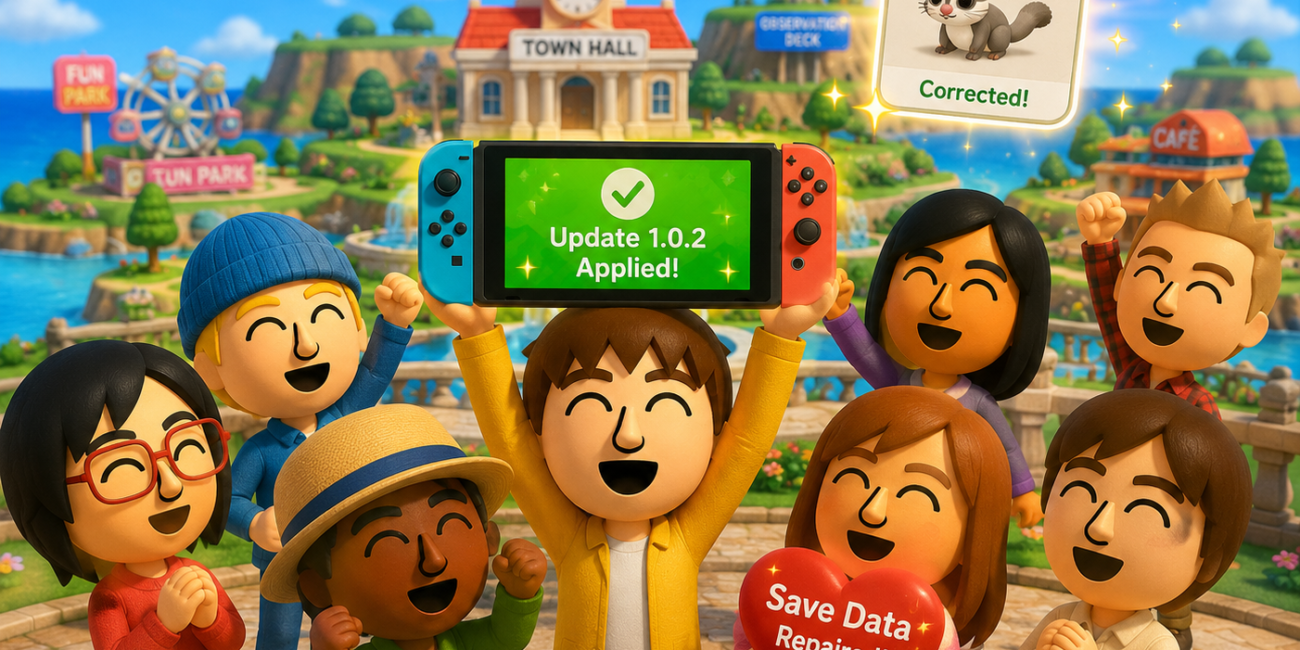
Perhaps the most charming fix included in the patch notes—and one that has already become a talking point among fans—is the correction of a biological inaccuracy. In the launch version of the game, the treasure item labeled as a “Sugar Glider” was erroneously represented by an image of a Southern Flying Squirrel. While the two animals look similar to the untrained eye, the dedicated Tomodachi community was quick to point out the discrepancy. The developers showed a surprising level of attention to detail by including a fix for this in Version 1.0.2, replacing the squirrel icon with a proper illustration of a sugar glider. It is a small change, but it demonstrates a level of care for the game’s internal logic and world-building that resonates with the player base.
As players navigate to their System Settings to ensure their software is up to date, the general sentiment is one of gratitude. The first month of a game’s life is often a trial by fire, and Tomodachi Life: Living the Dream has survived its initial hurdles with flying colors. By focusing on these critical stability fixes, Nintendo has laid a solid foundation for what many hope will be a long cycle of support for the game. While the community is already looking forward to the possibility of future DLC—perhaps adding more personality types or larger island expansions—the priority for now is a game that works exactly as intended.
For those who have not yet seen the update prompt, the process is straightforward. By selecting the game icon on the Home Menu and accessing the software update menu via the internet, players can download the patch in just a few minutes. As the sun rises on a new day in Living the Dream, islanders can now confess their love, build their dream homes, and trade their correctly-labeled sugar gliders without the looming shadow of a system crash. It is a vital update that ensures the “dream” promised in the title remains a reality for its millions of players.