




Android 17 Beta 4 Marks Final Development Milestone Ahead of Stable Summer Release
The journey toward the next major evolution of the Android operating system has reached its penultimate chapter. Google has officially commenced the rollout of Android 17 Beta 4 to eligible Pixel devices, signaling the end of the scheduled beta cycle. This release represents a critical transition point for the software, moving away from the experimental phase of feature introduction and into the final stage of polishing and stabilization. For tech enthusiasts and developers alike, Beta 4 serves as the most reliable preview of what the global user base will experience when the stable version arrives later this year.
This latest build, identified by version number CP21.260330.008, arrives at a time when the mobile industry is increasingly focused on the intersection of privacy and performance. Unlike earlier iterations of the Android 17 preview, which introduced foundational changes to the system architecture, Beta 4 is characterized by its subtlety. The primary objective of this release is to iron out the remaining inconsistencies in the user interface and ensure that the platform’s core services are robust enough for daily use by millions of people.
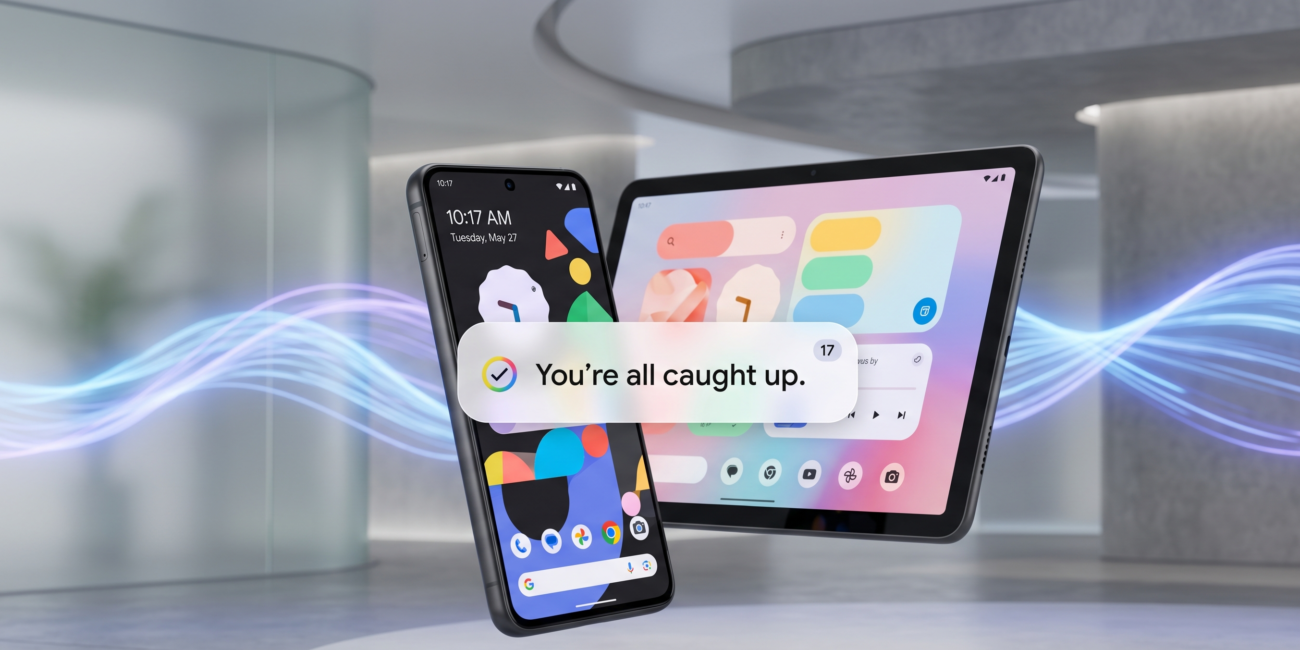
One of the most notable visual adjustments in this version is a shift in how the system communicates with the user regarding notifications. In a move that aligns the mobile operating system more closely with the interface found on the Pixel Watch, Google has replaced the standard and somewhat cold “No notifications” text with a more encouraging and modern “You’re all caught up” prompt. While this may seem like a minor aesthetic change, it reflects a broader design philosophy aimed at making the software feel more intuitive and human-centric. Accompanying this change is the introduction of a new system icon and various micro-animations that contribute to a sense of visual cohesion across the entire UI.
Under the hood, Android 17 continues to build upon the privacy-first framework that has become a hallmark of Google’s modern software strategy. The Beta 4 release includes several refinements to background process management, which not only enhances the security of user data but also improves battery efficiency. By tightening the restrictions on how apps interact with one another and the system hardware, Google is attempting to create a more predictable and secure environment. These stability improvements are built on the foundations laid by Betas 2 and 3, which had already addressed many of the early-stage performance bottlenecks.
For the developer community, Beta 4 is the definitive signal to finalize app compatibility testing. With the system APIs now locked and the behavior of the OS reaching a “near-final” state, developers are encouraged to ensure their applications leverage the new capabilities of Android 17 without performance degradation. The release notes accompanying this build provide detailed guidance on navigating the final technical requirements, ensuring that when the public rollout begins, the ecosystem of apps is ready to support the new software seamlessly.
The compatibility list for this beta remains extensive, covering several generations of Google hardware. Owners of the Pixel 6 series, including the 6, 6 Pro, and 6a, represent the oldest cohort of supported devices, proving Google’s commitment to long-term software support for its older chips. Naturally, the entire modern lineup is included, spanning the Pixel 7 and 8 series through to the latest flagship Pixel 10, Pixel 10 Pro, and Pixel 10 Pro XL. The update also extends to Google’s foldable and large-screen segments, specifically the Pixel Fold, Pixel 9 Pro Fold, Pixel 10 Pro Fold, and the Pixel Tablet, ensuring that the multitasking and layout refinements inherent in Android 17 are tested across various form factors.
Accessing this update is a straightforward process for those already enrolled in the Android Beta Program. The software is delivered as an over-the-air update, allowing users to transition from Beta 3 or even a stable version of Android 16 with relative ease. However, despite the advanced stage of development, the standard caveats of beta testing still apply. Because this is pre-release software, there remains a persistent risk of minor bugs, occasional performance fluctuations, and unexpected app crashes. For many users, the lure of experiencing the latest features early outweighs these risks, but for those who rely on their Pixel as a primary tool for work or critical communication, caution is advised.
The timing of this release is particularly significant when considering the historical context of Google’s launch windows. Last year, the stable version of Android 16 was released in June, and the current trajectory of the Android 17 beta cycle suggests a similar timeline. With Beta 4 being the final scheduled update, the coming weeks will likely see a period of quiet as Google prepares the final master build. If the current schedule holds, a stable public rollout could be expected as early as June 2026, coinciding with the typical peak of the tech industry’s mid-year announcement season.
In summary, Android 17 Beta 4 is less about “newness” and more about “readiness.” It is the culmination of months of feedback and iterative design. By focusing on UI polish, such as the notification panel updates and system icons, while simultaneously reinforcing the back-end stability and privacy features, Google is setting the stage for a release that prioritizes the user experience above all else. As the software matures into its final form, the mobile community is left with a clear view of a more refined, secure, and user-friendly Android future. Whether you are a developer looking to optimize your latest project or a Pixel fan eager for a smoother interface, Beta 4 offers a stable and sophisticated bridge to the next era of mobile computing.