



Elon Musk Warns Anthropic as SpaceX Deepens Its Push Into the Global AI Race
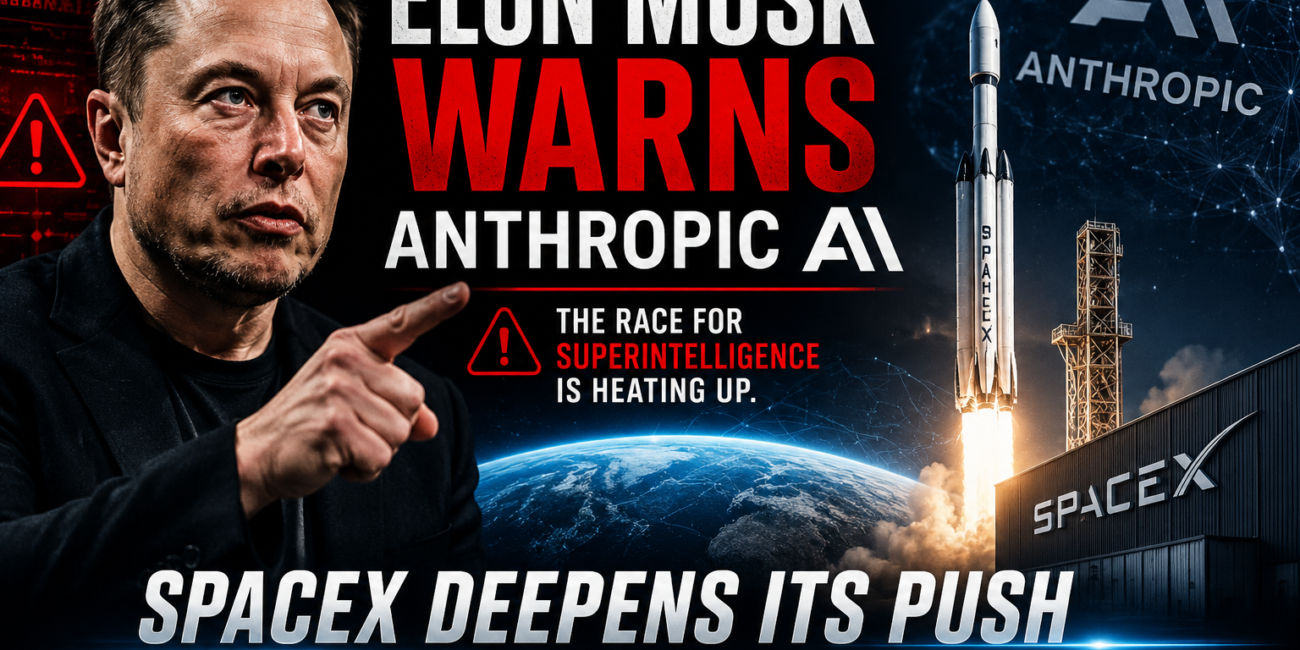
Elon Musk has reportedly delivered a clear warning to artificial intelligence startup Anthropic as the company enters a major computing partnership with SpaceX, signaling that the growing alliance between the two firms could quickly collapse if Anthropic’s AI systems fail to meet expectations around safety, alignment, or performance.
The warning comes at a time when the global AI industry is rapidly transforming into a battle not only over software models and chatbots, but also over access to the massive computing infrastructure needed to power next-generation artificial intelligence systems. The deal between SpaceX and Anthropic has emerged as one of the largest AI infrastructure partnerships announced this year and highlights how the race for AI dominance is increasingly being driven by data centers, graphics processors, electricity capacity, and supercomputing networks.
According to reports, Anthropic will gain access to SpaceX’s enormous Colossus 1 AI supercomputer facility in Memphis, Tennessee, allowing the company to dramatically expand the capabilities of its Claude AI platform. However, Musk reportedly made it clear during discussions surrounding the agreement that the partnership would not continue if Anthropic’s AI tools created concerns around safety, reliability, or alignment with human interests.
Anthropic Secures Massive Compute Power From SpaceX
The agreement represents a major milestone for Anthropic, one of OpenAI’s biggest competitors in the rapidly expanding generative AI industry. The company has experienced explosive growth over the past year, particularly in enterprise AI services and AI coding tools powered by its Claude models.
Demand for Claude AI reportedly surged far beyond the company’s original projections, creating severe pressure on its existing computing infrastructure. To address this issue, Anthropic turned to SpaceX for access to one of the largest AI computing facilities currently operating in the world.
Under the agreement, Anthropic is expected to receive access to more than 220,000 Nvidia AI processors and over 300 megawatts of compute capacity through the Colossus 1 data center. The facility includes advanced Nvidia H100, H200, and GB200 chips, which are considered some of the most powerful AI processors available today.
The partnership is expected to significantly increase Anthropic’s ability to serve enterprise customers, improve Claude AI performance, and remove usage limitations that had previously frustrated some users of its premium plans.
Industry analysts say the agreement reflects the growing reality that AI companies can no longer compete effectively without massive access to GPUs, power infrastructure, cooling systems, and hyperscale data centers. In many ways, computing infrastructure has become the most important strategic asset in the AI race.
Musk’s Warning Reflects Ongoing AI Safety Concerns
Although the partnership appears commercially beneficial for both sides, Musk’s reported warning underscores his continuing concerns about AI safety and alignment.
For years, Musk has repeatedly warned about the potential dangers of advanced artificial intelligence, arguing that AI systems should remain aligned with human values and subject to strong oversight. His latest comments suggest he intends to maintain strict conditions around any AI systems operating on SpaceX infrastructure.
Reports indicate Musk told Anthropic that the agreement could be canceled if the company’s AI tools became problematic or failed to meet expectations. The exact standards behind Musk’s concerns were not publicly detailed, but the comments align with his long-standing criticism of uncontrolled AI development.
The warning is especially notable because Musk had previously criticized Anthropic publicly. In earlier remarks, he reportedly referred to the company using harsh language and questioned its ideological direction. However, that relationship appears to have changed dramatically in recent months.
According to reports, Musk personally met members of the Anthropic leadership team before agreeing to the partnership and later expressed confidence in the company’s commitment to responsible AI development.
The shift illustrates how rapidly alliances and rivalries are changing in the highly competitive AI industry.
Anthropic Introduces “Dreaming” AI Feature
The partnership announcement coincided with Anthropic’s developer conference in San Francisco, where the company unveiled a new feature called “dreaming” for Claude AI.
The feature is designed to help AI systems improve themselves over time by analyzing previous interactions, identifying patterns, and updating contextual understanding between sessions. Anthropic says the system allows Claude AI to become more adaptive and effective in handling coding, research, and enterprise workflows.
The introduction of self-improving AI features has intensified discussions across the technology industry regarding how quickly advanced AI systems are evolving. Some experts believe such systems could dramatically increase productivity and automation capabilities, while others warn that increasingly autonomous AI behavior could create new safety and oversight challenges.
Anthropic has attempted to position itself as a company focused heavily on AI safety and constitutional AI principles. Musk’s willingness to support the company with massive compute resources may indicate that he sees Anthropic as more aligned with his AI philosophy than some rival firms.
SpaceX Is Rapidly Becoming an AI Infrastructure Giant
The Anthropic deal also reveals how dramatically SpaceX is expanding beyond its traditional identity as a rocket and satellite company.
Under Musk’s leadership, SpaceX has increasingly moved into artificial intelligence infrastructure, large-scale computing, and AI hardware development. Colossus 1 has become a centerpiece of these ambitions, giving SpaceX a powerful role in the global AI ecosystem.
Industry observers now believe Musk is positioning SpaceX not only as a space transportation company but also as a future AI infrastructure powerhouse capable of competing with major cloud providers and data center operators.
Reports suggest SpaceX is also exploring ambitious long-term projects involving orbital AI data centers and space-based computing infrastructure. Such systems could theoretically solve some of the power and cooling limitations facing Earth-based AI facilities.
The company has additionally announced plans for Terafab, a massive semiconductor manufacturing project in Texas focused on producing AI chips and high-performance computing hardware for future AI systems.
These developments indicate Musk is attempting to build a vertically integrated AI ecosystem combining:
- AI models
- supercomputers
- data centers
- semiconductor manufacturing
- satellite infrastructure
- orbital computing
xAI May Disappear Into “SpaceXAI”
Another major development connected to the partnership involves Musk’s AI startup xAI, the company behind the Grok chatbot.
Reports indicate Musk may dissolve xAI as a standalone brand and merge its operations directly into SpaceX under a broader “SpaceXAI” identity. The restructuring is reportedly part of a larger corporate strategy tied to SpaceX’s anticipated public offering.
The move could allow Musk to combine SpaceX’s space infrastructure, Starlink satellite systems, AI computing facilities, and Grok AI products into a single integrated ecosystem.
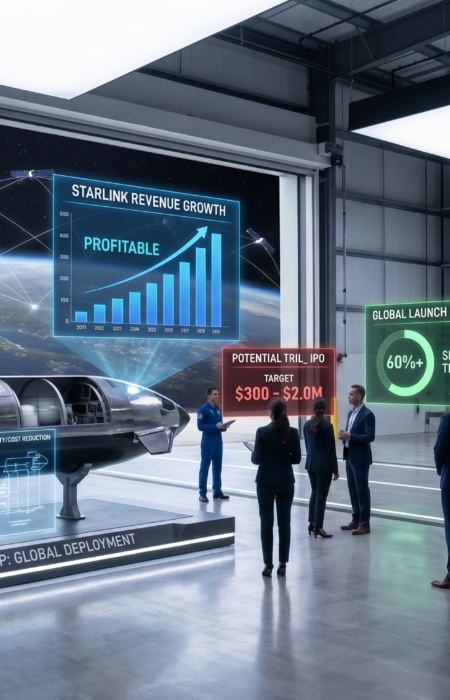
Some analysts believe this consolidation may help strengthen investor interest ahead of a potential SpaceX IPO that could become one of the largest public listings in history. Reports suggest the company may seek a valuation approaching $2 trillion.
AI Industry Competition Is Becoming a Compute War
The Anthropic-SpaceX partnership highlights a major transformation taking place across the AI industry. While public attention often focuses on chatbots and AI features, the real competition increasingly revolves around access to infrastructure.
Training and operating advanced AI systems now requires enormous amounts of electricity, cooling capacity, specialized chips, and data center space. As a result, AI companies are racing to secure long-term access to computing power before shortages worsen further.
The growing importance of compute infrastructure has already reshaped relationships across Silicon Valley. Companies that were once direct rivals are now entering strategic partnerships simply to survive the enormous demands of AI scaling.
For Anthropic, the SpaceX deal provides critical computing resources needed to continue expanding Claude AI. For Musk, the agreement helps monetize unused infrastructure while positioning SpaceX as one of the most important players in the future of artificial intelligence.
At the same time, Musk’s warning to Anthropic demonstrates that even as AI partnerships grow larger and more complex, concerns surrounding AI safety, control, and alignment remain at the center of the industry’s future.