




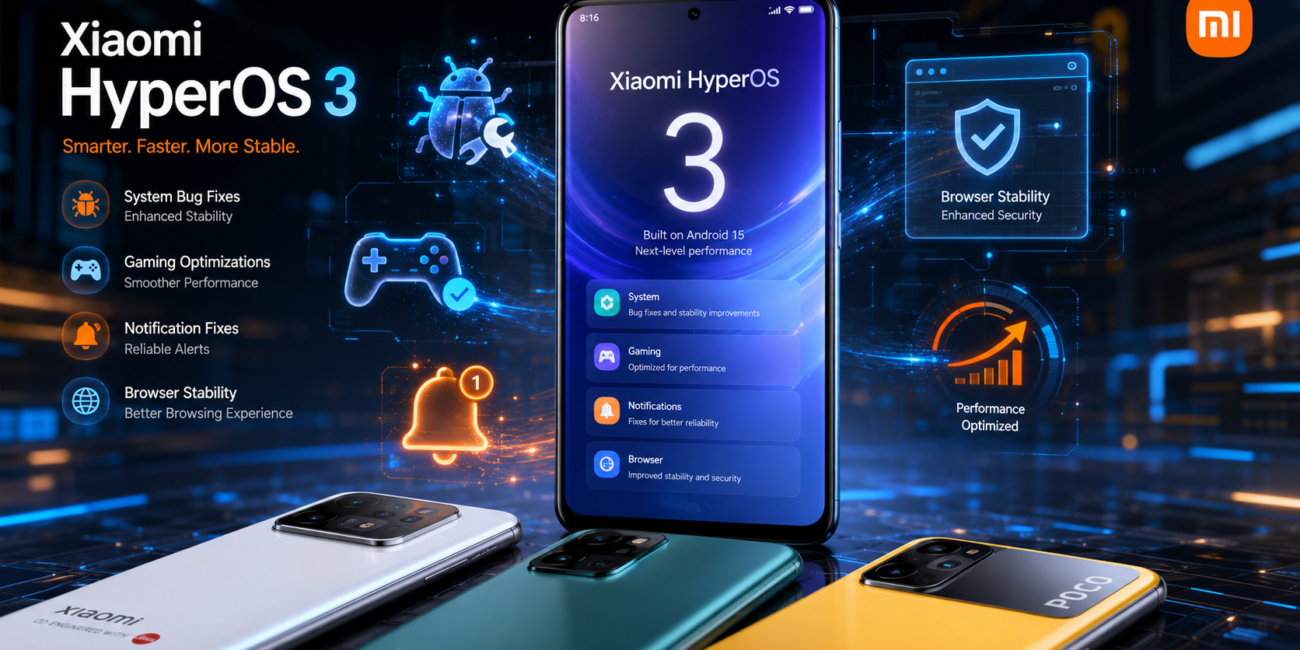
Xiaomi HyperOS 3 Update Fixes Major Bugs for Xiaomi, Redmi, and POCO Phones
Xiaomi Starts Rolling Out Important HyperOS 3 Bug Fixes
Xiaomi has started addressing several major issues reported by users after the release of HyperOS 3. The company recently confirmed that a new software optimization update is being prepared for multiple Xiaomi, Redmi, and POCO smartphones. The update mainly focuses on fixing notification problems, gaming performance issues, browser crashes, and system stability errors that affected many users after upgrading to the latest version of HyperOS.
According to recent reports shared by different tech publications, Xiaomi’s software team has already identified the major bugs and is actively working on solutions. The upcoming fixes are expected to improve the overall user experience across flagship and mid-range devices running HyperOS 3.
The company has been receiving continuous feedback from users through community forums and internal feedback channels. Many users reported that notifications were delayed or missing entirely, while gamers experienced frame drops and performance instability during heavy gameplay sessions. Browser-related crashes also became one of the most discussed issues among HyperOS users.
Notification Problems Became One of the Biggest Complaints
One of the biggest concerns after the HyperOS 3 rollout was the notification management system. Several users reported that important app notifications either arrived very late or did not appear at all. Messaging apps, social media platforms, and work-related applications were heavily affected by the issue.
Users complained that background apps were being aggressively restricted by the system, causing delays in alerts and push notifications. This created problems for people who rely on instant communication for work, business, and daily activities.
Xiaomi acknowledged that the issue was connected to battery optimization and system-level background process management. The company stated that engineers are now fine-tuning the notification system to ensure apps remain active without consuming excessive battery power.
The new update is expected to improve real-time notification delivery while maintaining better battery efficiency. This fix could significantly improve the daily experience for millions of HyperOS users worldwide.
Gaming Performance Issues Frustrated Mobile Gamers
Gaming-related bugs also became a major issue after the HyperOS 3 update. Many users of Xiaomi and POCO gaming-focused smartphones reported sudden frame drops, overheating, touch response delays, and inconsistent performance during gameplay.
The problems were especially noticeable in high-performance games that require stable GPU optimization. Some players claimed that Game Turbo mode was not functioning correctly after the update, resulting in poor performance despite using powerful hardware.
Xiaomi confirmed that certain system optimization conflicts inside HyperOS 3 affected gaming resources and thermal management. The company is now optimizing Game Turbo and GPU scheduling to improve gaming stability.
The upcoming patch is expected to provide smoother gameplay, reduced overheating, better touch responsiveness, and improved frame-rate consistency. These improvements are important for Xiaomi because the company has built a strong reputation among mobile gamers through its POCO and Redmi gaming-oriented smartphones.
Many users are hoping the update will restore the same gaming performance levels that were available before the HyperOS 3 rollout.
Browser Crashes and App Stability Problems
Another commonly reported issue involved browser crashes and app instability. Users experienced random browser shutdowns while browsing websites, watching videos, or switching between tabs. In some cases, the browser completely froze and required a force restart.
Apart from browsers, several apps also faced occasional crashes and freezing problems. Users reported that multitasking performance became inconsistent after the update, especially on devices with heavy background usage.
Xiaomi stated that these issues were related to memory management and compatibility conflicts introduced in HyperOS 3. Engineers are currently optimizing RAM handling and application resource allocation to reduce crashes and improve multitasking performance.
The company is also testing fixes internally before rolling them out globally. Once released, users should notice improved app stability, smoother browsing performance, and fewer unexpected crashes.
Xiaomi Focuses on Software Stability
The recent wave of bug reports has highlighted the growing importance of software optimization in modern smartphones. While HyperOS 3 introduced several visual enhancements and AI-based features, the update also exposed challenges related to system stability.
Xiaomi appears to be taking the feedback seriously. The company has started publishing regular bug-fix reports and transparency updates to keep users informed about ongoing development progress.
This approach is helping Xiaomi maintain user trust while improving the software experience. Many smartphone brands face similar problems after major operating system updates, but companies that respond quickly often receive better community support.
HyperOS represents Xiaomi’s long-term strategy to unify its smartphone, tablet, smart home, and AI ecosystem under a single operating platform. Because of this, software reliability has become more important than ever for the company.
HyperOS 3 Is a Major Step for Xiaomi’s Ecosystem
HyperOS 3 is considered one of Xiaomi’s most important software upgrades in recent years. The operating system aims to provide a smoother interface, better AI integration, improved animations, stronger ecosystem connectivity, and advanced resource management.
The company wants HyperOS to compete directly with premium Android experiences offered by other smartphone manufacturers. Xiaomi has been investing heavily in AI-driven features, cross-device integration, and performance optimization to strengthen its ecosystem.
However, major software upgrades often introduce unexpected issues during the early rollout stages. Device compatibility differences, hardware variations, and aggressive optimization settings can sometimes create bugs that are difficult to identify before public release.
The current situation shows how complex smartphone software development has become. Even flagship-level devices can experience performance issues when major system changes are introduced.
Despite the challenges, Xiaomi’s quick response suggests that the company wants HyperOS to mature into a stable and reliable platform over time.
Xiaomi Users Expect Faster Improvements
The response from the Xiaomi community has been mixed. While many users appreciate the company’s acknowledgment of the issues, others believe the bugs should have been identified before the public rollout.
Social media discussions and community forums have been filled with user feedback regarding delayed notifications, laggy gaming performance, and overheating problems. Some users even postponed updating their devices after seeing negative early experiences shared online.
At the same time, many long-term Xiaomi users remain optimistic because the company has a history of improving software stability through regular patches and updates. Previous MIUI and HyperOS versions also faced early-stage bugs that were eventually resolved through optimization updates.
The next few software patches will likely play a major role in shaping public opinion about HyperOS 3. If Xiaomi successfully fixes the major complaints quickly, user