




Nokia Shares Surge as AI-Powered Network Technology Sparks Investor Excitement
Nokia Stock Climbs to Multi-Year High Amid AI Expansion
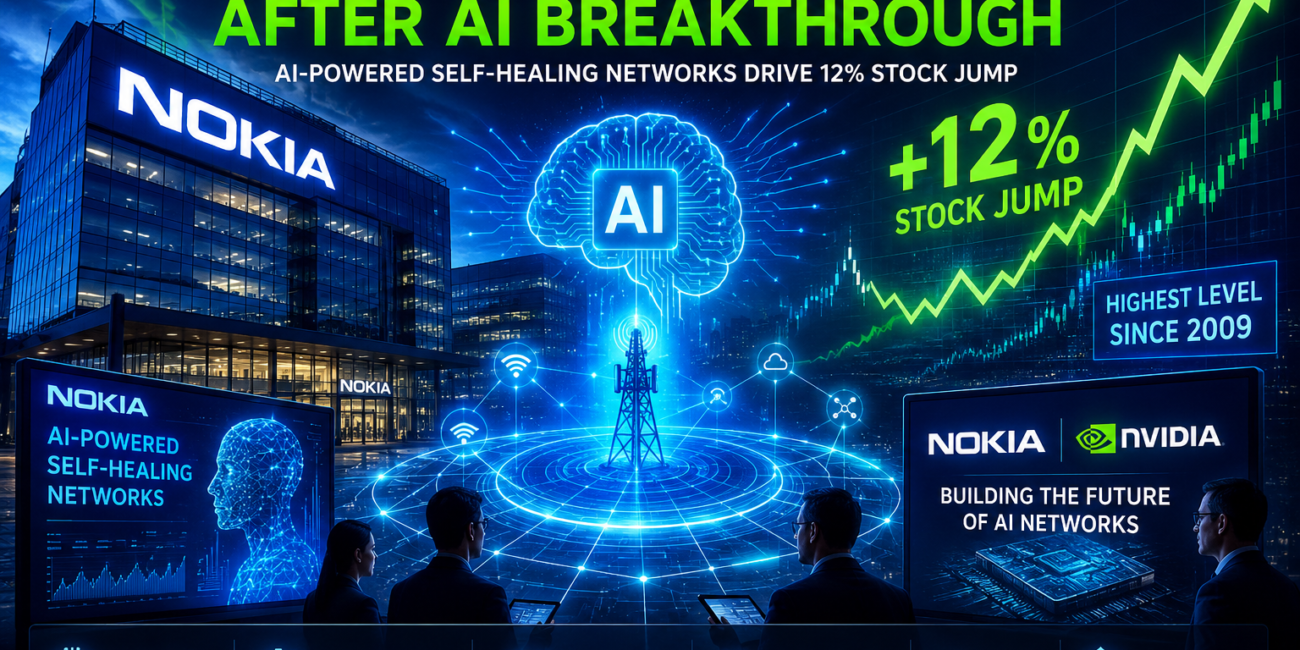
Finnish telecom giant Nokia witnessed a massive surge in its stock price after unveiling a new generation of artificial intelligence-powered network technologies designed to automate broadband and telecom infrastructure. The company’s shares jumped nearly 12% in a single trading session, marking one of Nokia’s strongest market performances in years and pushing the stock to its highest level since 2009.
The sudden rally reflects growing investor confidence in Nokia’s transformation from a traditional telecom hardware company into a major player in AI-driven infrastructure and next-generation networking technology. Analysts believe the company’s latest innovations could position Nokia at the center of the rapidly expanding artificial intelligence and 6G communications market.
The rally also comes at a time when investors are aggressively searching for companies that can benefit from the global AI boom. While most attention in recent years has focused on semiconductor manufacturers and cloud computing giants, Nokia’s latest announcement has shown that telecom infrastructure providers may also become key beneficiaries of the artificial intelligence revolution.
Nokia Introduces Self-Healing AI Networks
The primary reason behind the stock surge was Nokia’s announcement of new “Agentic AI” capabilities for telecom and broadband networks. The company revealed advanced AI systems capable of monitoring network conditions in real time, identifying technical issues automatically, and resolving many of those problems without requiring direct human intervention.
According to Nokia, the technology is designed to create what the company describes as “self-healing networks.” These systems use artificial intelligence to detect slowdowns, outages, and service disruptions before customers even notice them. Once an issue is detected, the AI platform can either resolve the problem independently or recommend corrective actions to network operators.
Industry experts say this represents a major shift in the telecom sector, where network management has traditionally required large teams of engineers and constant manual supervision. By automating many operational processes, Nokia believes telecom providers can reduce costs, improve customer experience, and increase network reliability.
The company also demonstrated AI-powered voice command functionality, allowing operators to interact with network systems using natural language instructions. This feature is expected to simplify network administration and reduce the complexity of managing large-scale telecom infrastructure.
Investors See Nokia as an Emerging AI Infrastructure Company
The market reaction suggests that investors are beginning to view Nokia differently than they have in the past decade. For years, Nokia was largely associated with declining mobile phone dominance and intense competition in telecom equipment markets. However, the company has gradually repositioned itself around advanced networking technologies, cloud infrastructure, and now artificial intelligence.
Analysts believe Nokia’s latest AI strategy could significantly strengthen its position in future communication systems, particularly as global telecom providers prepare for the eventual rollout of 6G networks. Unlike earlier generations of mobile technology, future networks are expected to rely heavily on artificial intelligence for optimization, traffic management, security, and automation.
This shift has led many investors to categorize Nokia alongside companies building critical AI infrastructure rather than viewing it solely as a telecom equipment manufacturer. The company’s growing involvement in AI networking, edge computing, and autonomous systems has contributed to renewed optimism surrounding its long-term growth potential.
Trading activity surrounding Nokia shares also reflected strong investor enthusiasm. Millions of additional shares changed hands compared to average trading sessions, indicating that institutional investors and retail traders alike responded positively to the company’s AI-focused announcements.
Nvidia Partnership Strengthens Nokia’s AI Ambitions
Another major factor driving investor confidence is Nokia’s growing partnership with NVIDIA. Reports indicate that Nvidia invested approximately $1 billion into Nokia during 2025 as part of a broader collaboration focused on AI-powered networking systems.
The partnership aims to combine Nvidia’s expertise in artificial intelligence computing with Nokia’s telecom infrastructure capabilities. Together, the companies are working on AI-enhanced networking platforms capable of supporting next-generation wireless communication systems and large-scale data processing.
Industry observers believe the collaboration gives Nokia a significant competitive advantage in the race toward AI-driven telecom infrastructure. Nvidia has become one of the most influential companies in artificial intelligence due to its dominance in AI chips and accelerated computing technology. By aligning itself with Nvidia, Nokia gains access to advanced AI tools and computing resources that could accelerate the development of future network systems.
The collaboration is particularly important as telecom companies worldwide prepare for growing data demand from AI applications, autonomous systems, smart cities, and connected devices. Future communication networks are expected to require far greater intelligence and automation than current 5G systems.
Expansion Beyond Traditional Telecom Markets
Nokia’s ambitions are no longer limited to commercial telecom infrastructure. The company has also expanded into defense and military communications through partnerships with advanced technology firms such as Anduril Industries.
This expansion into defense technology is attracting additional investor interest because military organizations increasingly require secure, AI-powered communication systems capable of operating in highly complex environments. Analysts believe Nokia’s networking expertise could help the company secure new contracts in defense, aerospace, and government communications.
The move also diversifies Nokia’s business beyond the highly competitive telecom equipment market, which has faced pricing pressure and slower growth in recent years. By entering sectors such as AI defense systems and autonomous networking, Nokia may gain access to higher-margin opportunities with long-term growth potential.
Experts say this diversification strategy could help stabilize Nokia’s revenues while allowing the company to capitalize on emerging technologies that are expected to expand significantly over the next decade.
AI Boom Continues to Drive Global Markets
Nokia’s stock rally highlights the broader impact artificial intelligence is having across global financial markets. Over the past two years, investors have poured billions of dollars into companies connected to AI development, including chipmakers, cloud providers, software companies, and infrastructure firms.
The excitement surrounding AI has created enormous market gains for technology companies seen as essential to the future AI ecosystem. While Nvidia has become the most visible symbol of this trend, investors are increasingly searching for additional companies that could benefit from the long-term expansion of AI technologies.
Nokia’s latest announcements suggest telecom infrastructure may become one of the next major areas of AI investment. As AI systems generate larger amounts of data and require faster communication speeds, telecom providers will need smarter and more automated network infrastructure capable of handling increased demand.
This trend could create major opportunities for companies that specialize in AI-powered communication systems, network optimization, and intelligent data management.
Challenges Still Remain for Nokia
Despite the strong rally, analysts caution that Nokia still faces several challenges. The telecom equipment industry remains highly competitive, with rivals continuing to invest heavily in advanced networking technologies. The company must also prove that its AI initiatives can generate sustainable revenue growth rather than temporary investor excitement.
Some market experts have also warned that Nokia’s stock valuation has risen rapidly in a short period of time. Investors are now expecting strong execution and meaningful commercial success from the company’s AI strategy. If growth slows or product adoption disappoints, the stock could experience volatility.
In addition, the transition toward AI-powered telecom infrastructure will likely take several years, meaning Nokia must continue investing heavily in research and development while competing against other global technology firms.
Still, many analysts believe the company’s recent transformation represents one of the most significant turnarounds in the telecom sector. After years of struggling to redefine its identity following the collapse of its mobile phone business, Nokia now appears to be positioning itself at the center of one of the world’s most important technological shifts.
Nokia’s Transformation Gains Momentum
The recent surge in Nokia shares reflects more than just excitement over a single product announcement. It represents growing confidence that the company may finally have found a powerful long-term growth strategy centered around artificial intelligence and intelligent network infrastructure.
As telecom providers, governments, and businesses increasingly rely on AI-driven systems, demand for advanced networking technology is expected to grow rapidly. Nokia is now attempting to position itself as a foundational player in that future.
Whether the company can fully capitalize on the opportunity remains uncertain, but investors clearly believe Nokia’s AI strategy has the potential to reshape its future. The dramatic stock rally suggests that Wall Street is beginning to view Nokia not as a fading legacy telecom brand, but as an emerging AI infrastructure company preparing for the next era of global connectivity.