





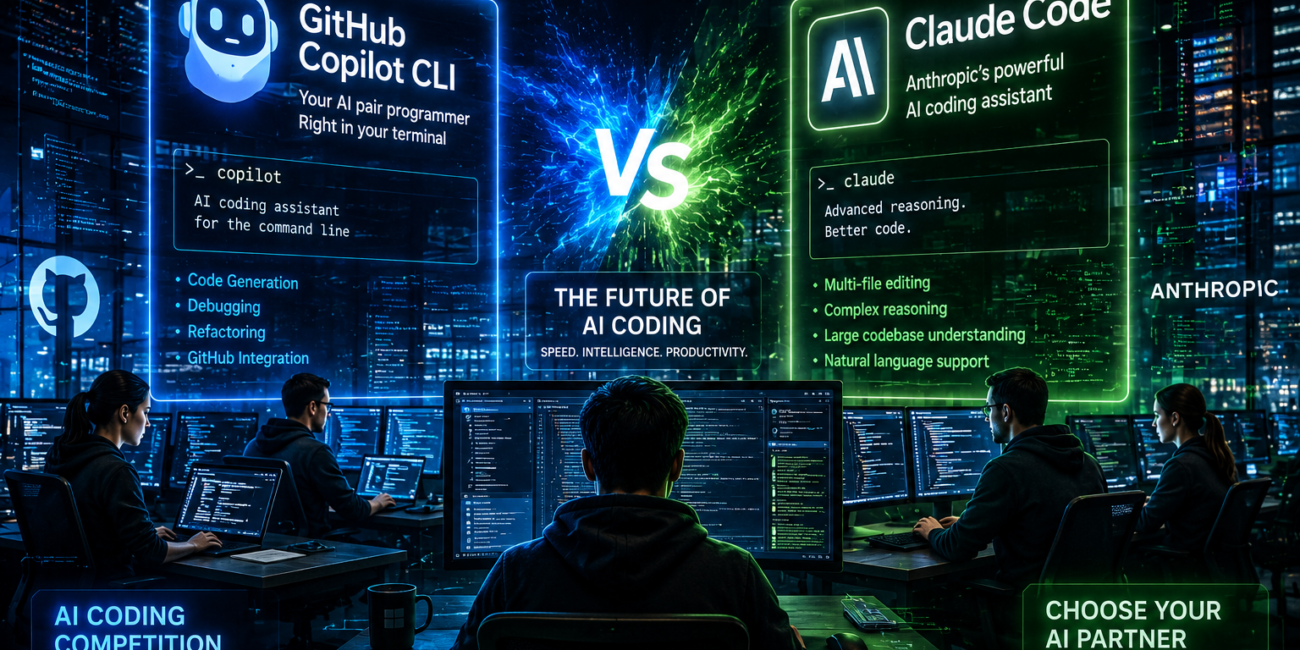
Microsoft Rolls Back Internal Use of Claude Code as Company Pushes Developers Toward GitHub Copilot CLI
Microsoft Changes Direction in AI Coding Strategy
Microsoft is reportedly reducing the internal use of Claude Code, the popular AI-powered coding assistant developed by Anthropic, as the tech giant shifts its focus toward strengthening its own AI coding ecosystem through GitHub Copilot CLI. The decision marks a significant moment in the rapidly growing AI software development industry and highlights the intense competition among companies building next-generation coding assistants.
According to reports, Microsoft has started rolling back many internal licenses for Claude Code within its Experiences + Devices division, the business unit responsible for products such as Windows, Teams, Outlook, Surface devices, and Microsoft 365. Employees in those divisions are now being encouraged to adopt GitHub Copilot CLI as Microsoft works to standardize AI-powered development workflows across the company.
The move comes despite Claude Code reportedly becoming highly popular among Microsoft employees over the past several months. Engineers, designers, project managers, and even non-technical workers had increasingly turned to the tool for coding tasks, prototyping projects, and workflow automation. Many employees reportedly viewed Claude Code as one of the most effective AI coding tools available inside the company.
However, Microsoft now appears determined to place its own AI products at the center of its long-term software development strategy.
Claude Code Quickly Became Popular Inside Microsoft
Microsoft initially introduced Claude Code internally in late 2025 as part of its broader experimentation with AI-assisted software development. The company provided access to thousands of employees to explore how advanced AI coding systems could improve productivity, accelerate development cycles, and simplify technical tasks.
What began as a limited internal experiment reportedly expanded rapidly as employees discovered new ways to use the tool across different departments. Unlike traditional coding assistants aimed only at professional developers, Claude Code became widely used by employees with varying technical backgrounds.
Reports suggest the platform excelled at understanding large codebases, handling multi-file programming tasks, generating prototypes, and assisting with complex engineering workflows. Employees also appreciated its conversational style and ability to explain technical concepts clearly, making it useful even for workers without advanced programming experience.
The growing popularity of Claude Code reportedly created an unusual situation inside Microsoft. While the company has heavily invested in GitHub Copilot and its own AI products, many employees preferred Anthropic’s technology for certain coding tasks. This created internal pressure for Microsoft to strengthen its own tools in order to remain competitive within its own organization.
The situation also reflected the broader AI coding assistant race taking place across the technology industry, where developers increasingly compare tools based on coding quality, reasoning ability, speed, and workflow integration.
Microsoft Wants Greater Control Over Its AI Ecosystem
Although Claude Code gained strong internal support, Microsoft’s leadership reportedly decided that relying too heavily on a third-party AI coding platform was not aligned with the company’s long-term strategy.
Instead, Microsoft now wants GitHub Copilot CLI to become its primary command-line AI development tool across internal engineering teams. By centralizing workflows around Copilot, the company gains more direct control over product integration, feature development, data management, and software infrastructure.
Industry analysts believe the decision reflects a larger shift happening across the technology sector. Major tech companies are increasingly attempting to build tightly integrated AI ecosystems rather than depending heavily on external providers. Controlling the AI platform internally allows companies to shape product direction more aggressively while strengthening customer dependence on their broader software ecosystems.
For Microsoft, GitHub Copilot represents far more than a simple coding assistant. It has become one of the company’s most important AI products and plays a central role in its developer strategy. Because GitHub is already deeply integrated into global software development workflows, Microsoft sees Copilot as a key gateway into the future of AI-powered programming.
Executives reportedly believe GitHub Copilot CLI can evolve into a more customized and deeply integrated development environment tailored specifically for Microsoft engineering teams.
Financial Considerations Also Played a Role
Reports indicate that financial concerns may also have influenced Microsoft’s decision to reduce Claude Code licenses. Maintaining large-scale access to third-party AI systems can become extremely expensive, especially when thousands of employees use advanced language models daily for software development tasks.
The timing of the rollback is also notable because the reported June 30 deadline aligns with the end of Microsoft’s financial year. Analysts believe the company may be attempting to optimize AI spending while simultaneously directing more internal investment toward products it directly controls.
As competition in artificial intelligence intensifies, technology companies are spending billions of dollars on infrastructure, AI model training, cloud computing, and developer tools. Reducing reliance on external AI products may help Microsoft better manage long-term operating costs while improving profit margins on its own AI services.
At the same time, strengthening GitHub Copilot internally could accelerate product improvements based on employee feedback and real-world engineering use cases.
Microsoft’s Relationship With Anthropic Continues
Despite the reduction in Claude Code usage, Microsoft’s broader partnership with Anthropic is reportedly continuing. Anthropic’s Claude AI models remain available through several Microsoft services, including Azure AI infrastructure and enterprise AI platforms.
The relationship between Microsoft and Anthropic reflects the increasingly interconnected nature of the AI industry, where major companies often compete in some areas while collaborating in others. Microsoft continues to support multiple AI models across its cloud ecosystem even as it prioritizes internal products like Copilot.
Anthropic itself has emerged as one of the most influential artificial intelligence startups in the market, competing directly with companies such as OpenAI, Google DeepMind, and Meta in the race to develop advanced AI systems.
Claude models such as Claude Opus, Sonnet, and Haiku continue to gain popularity among developers due to their strong reasoning capabilities, coding performance, and conversational abilities. Even though Microsoft is reducing internal dependency on Claude Code, Anthropic’s technology still plays an important role within the broader AI ecosystem.
AI Coding Assistants Are Becoming a Battleground
The situation inside Microsoft highlights how competitive the AI coding assistant market has become. Over the past two years, AI-powered programming tools have rapidly transformed software development workflows across the technology industry.
Companies are now racing to build AI systems capable of writing code, debugging software, understanding large applications, automating repetitive engineering tasks, and even designing entire software architectures.
GitHub Copilot, Claude Code, Cursor, OpenAI coding systems, and several startup platforms are all competing to become the preferred AI companion for developers worldwide.
Industry experts believe AI coding assistants may fundamentally reshape software engineering over the next decade. Rather than replacing developers entirely, these tools are expected to dramatically increase productivity by automating repetitive work and simplifying complex technical tasks.
This shift could significantly reduce software development timelines while allowing smaller teams to build larger and more advanced products.
However, the growing importance of AI coding tools has also created intense strategic pressure among technology companies. The company that controls the dominant AI development ecosystem could gain enormous influence over future software creation.
That reality helps explain why Microsoft is prioritizing GitHub Copilot despite the popularity of Claude Code among employees.
Developers Continue Comparing AI Coding Platforms
The debate surrounding Claude Code and GitHub Copilot also reflects broader discussions taking place throughout the developer community. Many programmers actively compare different AI coding tools based on speed, code quality, reliability, reasoning ability, and workflow efficiency.
Claude Code reportedly earned praise for its ability to understand complex projects and generate thoughtful programming solutions across multiple files. Some developers viewed it as particularly strong for large-scale software architecture and technical reasoning tasks.
GitHub Copilot, meanwhile, benefits from deep integration with GitHub repositories, Visual Studio Code, Microsoft services, and enterprise development systems. Microsoft is expected to continue improving Copilot aggressively as competition intensifies.
Analysts believe the next phase of AI coding competition will focus not only on code generation quality but also on ecosystem integration, enterprise adoption, security, collaboration tools, and workflow automation.
In that environment, companies with large software ecosystems may hold an important long-term advantage.
The Future of AI Software Development
Microsoft’s decision to reduce internal use of Claude Code represents more than a simple software licensing change. It signals a larger strategic battle over who will control the future of AI-powered software development.
As artificial intelligence becomes increasingly embedded into programming workflows, companies are racing to establish dominance in what could become one of the most important technology markets of the next decade.
For Microsoft, strengthening GitHub Copilot is essential to maintaining leadership in developer tools and cloud computing. For Anthropic, the popularity of Claude Code inside one of the world’s largest technology companies demonstrates the growing influence of its AI systems.
The competition between AI coding assistants is still in its early stages, but the outcome could reshape how software is built across the global technology industry.
Microsoft’s latest move makes one thing clear: the battle for the future of AI coding tools is becoming increasingly intense, and every major technology company wants control over the platforms developers use every day.