




Nintendo Employee Data Reportedly Stolen in Cyberattack as Hackers Demand $2 Million Ransom
Alleged Breach Raises Fresh Concerns Over Employee Data Security and the Growing Threat of Triple Extortion
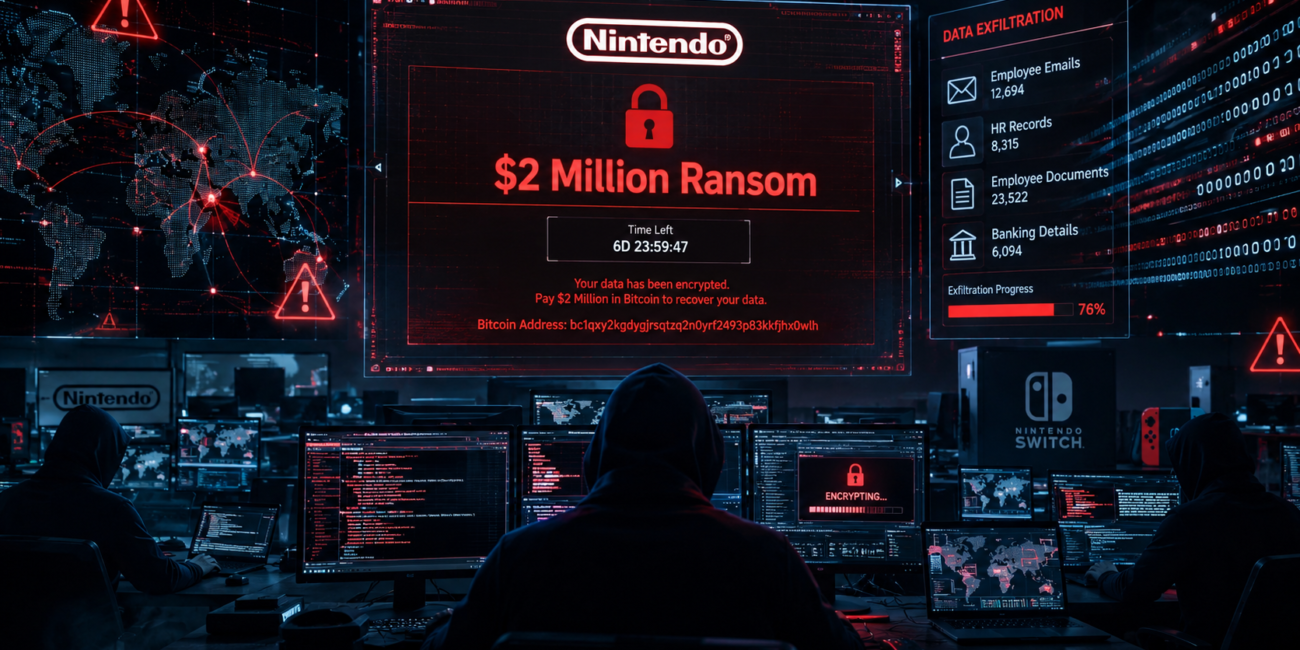
Nintendo, one of the world’s most recognized video game companies, has reportedly become the latest target of a cybercriminal operation after a hacking group claimed to have stolen sensitive employee information and demanded a ransom payment of $2 million. The incident, which was first reported by cybersecurity researchers, has drawn significant attention across the technology and gaming industries, highlighting the increasing risks organizations face from modern ransomware and data extortion campaigns.
According to reports, a threat actor operating under the name ShadowByt3$ has claimed responsibility for the attack. The group alleges that it successfully infiltrated systems connected to Nintendo and exfiltrated approximately 860 megabytes of confidential information. The attackers have threatened to release the data publicly if their financial demands are not met, placing additional pressure on the company as cybersecurity experts continue to monitor the situation.
At the time of reporting, Nintendo had not publicly confirmed the full scope of the alleged breach, and independent verification of the hackers’ claims remained unavailable. Nevertheless, the incident serves as another reminder that even globally recognized brands with extensive security resources remain vulnerable to increasingly sophisticated cyber threats.
Hackers Claim Access to Sensitive Employee Information
The most concerning aspect of the alleged breach is the type of information the attackers claim to have obtained. According to statements released by the hacking group, the stolen data includes employee names, email addresses, banking information, and private communications. If verified, such information could create serious risks for affected individuals, including identity theft, financial fraud, and targeted phishing attacks.
Employee records are among the most valuable assets for cybercriminals because they often contain personal and financial details that can be exploited in multiple ways. In addition to direct financial crimes, attackers frequently use stolen employee information to craft convincing social engineering campaigns that enable further compromises within an organization or its business network.
Cybersecurity experts have repeatedly warned that the exposure of employee data can have long-term consequences. Unlike passwords, which can be changed relatively quickly after a breach, personal information such as names, addresses, and banking details may remain valuable to cybercriminals for years. This makes data theft incidents particularly damaging even when the immediate operational impact appears limited.
While the exact nature and authenticity of the stolen information have yet to be confirmed, the allegations alone are likely to prompt concerns among employees, partners, and customers who depend on the security of corporate systems and data.
A Growing Trend in Modern Cybercrime
The reported attack against Nintendo reflects a broader shift in the tactics used by cybercriminal organizations. Traditional ransomware attacks typically focused on encrypting files and demanding payment in exchange for a decryption key. Over time, however, organizations improved their backup and recovery capabilities, reducing the effectiveness of encryption-only attacks.
In response, cybercriminals began adopting what became known as double extortion. Under this model, attackers not only encrypt data but also steal sensitive information before launching the ransomware phase. This allows them to threaten public disclosure of confidential records if the victim refuses to pay.
The alleged Nintendo incident demonstrates how cybercriminal groups are continuing to evolve their strategies. Reports indicate that the attackers may have employed a form of triple extortion, a tactic that seeks to increase pressure by targeting additional parties connected to the primary victim. Rather than relying solely on threats against the organization itself, attackers may contact employees, customers, suppliers, or business partners to amplify reputational and operational consequences.
This evolution reflects the growing sophistication of cybercrime operations. Many modern threat groups now function similarly to professional businesses, complete with dedicated infrastructure, negotiation teams, and public leak sites used to pressure victims into compliance.
The Human Cost of Data Breaches
While discussions about cyberattacks often focus on financial losses and business disruption, employee-focused breaches highlight the personal consequences of security incidents. When employee records are exposed, individuals can become direct targets of cybercriminal activity long after the initial attack has occurred.
Financial information can be used for fraudulent transactions, while personal details may support identity theft schemes. Stolen email addresses can become entry points for phishing campaigns designed to collect additional credentials or spread malware. In some cases, cybercriminals combine information from multiple breaches to create detailed profiles of potential victims, increasing the effectiveness of future attacks.
For organizations, protecting employee data has become both a security requirement and a matter of trust. Employees expect their personal information to be handled responsibly, and any compromise can create uncertainty about the effectiveness of an organization’s cybersecurity defenses.
As cyber threats continue to evolve, companies are increasingly recognizing that data protection is not solely a technical challenge. It also involves maintaining employee confidence and ensuring that adequate safeguards are in place to minimize exposure in the event of a breach.
Challenges Facing Large Global Organizations
Large multinational corporations like Nintendo face unique cybersecurity challenges due to the scale and complexity of their operations. Modern enterprises rely on interconnected systems, cloud platforms, third-party vendors, and remote work environments, all of which can create additional attack surfaces for cybercriminals.
Even organizations with mature security programs must constantly defend against a rapidly changing threat landscape. Attackers continuously search for vulnerabilities in software, cloud services, and supply chain relationships that may provide access to valuable information.
In recent years, several high-profile cyber incidents have demonstrated that attackers often exploit indirect pathways rather than targeting a company’s core infrastructure directly. Third-party service providers, software vendors, and business partners can all become entry points into larger organizations if appropriate security controls are not maintained throughout the supply chain.
The alleged Nintendo incident has renewed discussions about the importance of comprehensive risk management strategies that extend beyond internal networks. Security experts increasingly emphasize the need for continuous monitoring, vendor assessments, employee training, and incident response planning as essential components of modern cybersecurity programs.
Industry-Wide Implications
The reported attack is significant not only because of Nintendo’s global reputation but also because it reflects challenges facing organizations across every industry. Cybercriminals are increasingly motivated by financial gain, and large corporations remain attractive targets due to the potential value of their data and the resources available to respond to extortion demands.
The gaming industry has become a particularly appealing target in recent years because it handles large volumes of customer data, employee information, intellectual property, and online services. A successful attack can create widespread disruption while generating substantial publicity for threat actors seeking leverage over their victims.
At the same time, regulators around the world are placing greater emphasis on cybersecurity accountability. Data protection laws and reporting requirements continue to evolve, requiring organizations to demonstrate that they have implemented reasonable measures to safeguard sensitive information. Failure to do so can result in financial penalties, legal challenges, and reputational damage.
As a result, incidents such as the alleged Nintendo breach often have consequences that extend far beyond the immediate technical impact of the attack.
Investigation Continues Amid Uncertainty
Despite the attention generated by the hackers’ claims, many questions remain unanswered. The full extent of the alleged compromise, the methods used by the attackers, and the authenticity of the stolen data have not yet been independently verified. Cybersecurity incidents frequently involve complex investigations that can take weeks or months to complete before definitive conclusions are reached.
Organizations facing such situations must carefully balance transparency with the need to preserve the integrity of ongoing investigations. Premature disclosure of unverified information can create confusion, while delayed communication may lead to speculation and uncertainty among stakeholders.
For now, the reported attack serves as another example of the growing threat posed by data extortion groups and the challenges organizations face in defending against increasingly sophisticated cybercriminal operations.
Whether or not the attackers’ claims are ultimately substantiated, the incident underscores a broader reality confronting businesses worldwide: cybersecurity is no longer just an IT issue. It has become a critical business priority with implications for employee privacy, corporate reputation, operational resilience, and long-term trust. As cybercriminal tactics continue to evolve, organizations across every sector will need to remain vigilant, invest in stronger defenses, and prepare for a threat landscape that shows little sign of slowing down.