




The Trillion-Dollar Frontier: What Investors Must Know About SpaceX’s Financial Ascent
The global aerospace landscape is witnessing an unprecedented financial evolution as SpaceX transitions from a disruptive private entity into a dominant economic powerhouse. Long regarded as a high-risk venture fueled by the ambitious vision of its founder, Elon Musk, the company has successfully pivoted toward immense profitability and operational dominance. Wall Street analysts and institutional investors are increasingly viewing the enterprise not merely as a rocket launch provider, but as a multi-faceted technology, defense, and telecommunications conglomerate. With private valuations soaring and rumors of public market entries perpetually circling the financial sector, understanding the underlying drivers of SpaceX’s economy has become essential for anyone looking to navigate the future of the space economy.
The financial narrative of SpaceX is fundamentally anchored to its staggering valuation trajectory, which has defied traditional market benchmarks. In the private secondary markets, the company’s valuation has experienced an exponential surge, doubling within remarkably short timeframes to sit comfortably ahead of almost all traditional defense contractors and aerospace legacy giants. This rapid inflation in worth is driven by an influx of institutional capital eager to secure a piece of the only entity currently capable of cheap, reliable, and high-frequency access to orbit. For investors, this creates a unique environment where the company possesses the growth profile of a Silicon Valley software startup paired with the massive physical infrastructure and capital moats of an industrial titan.
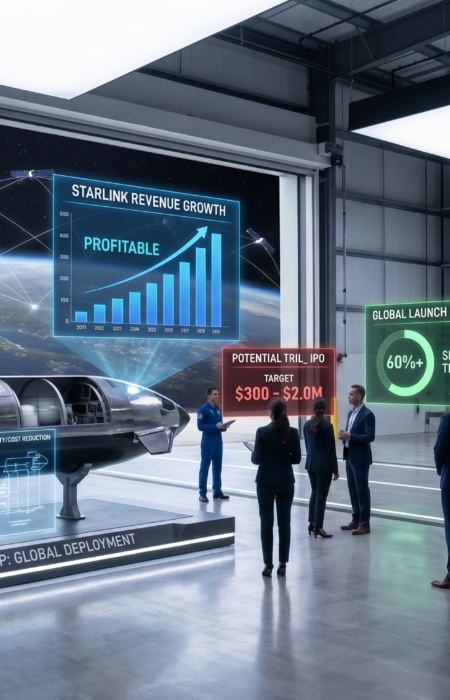
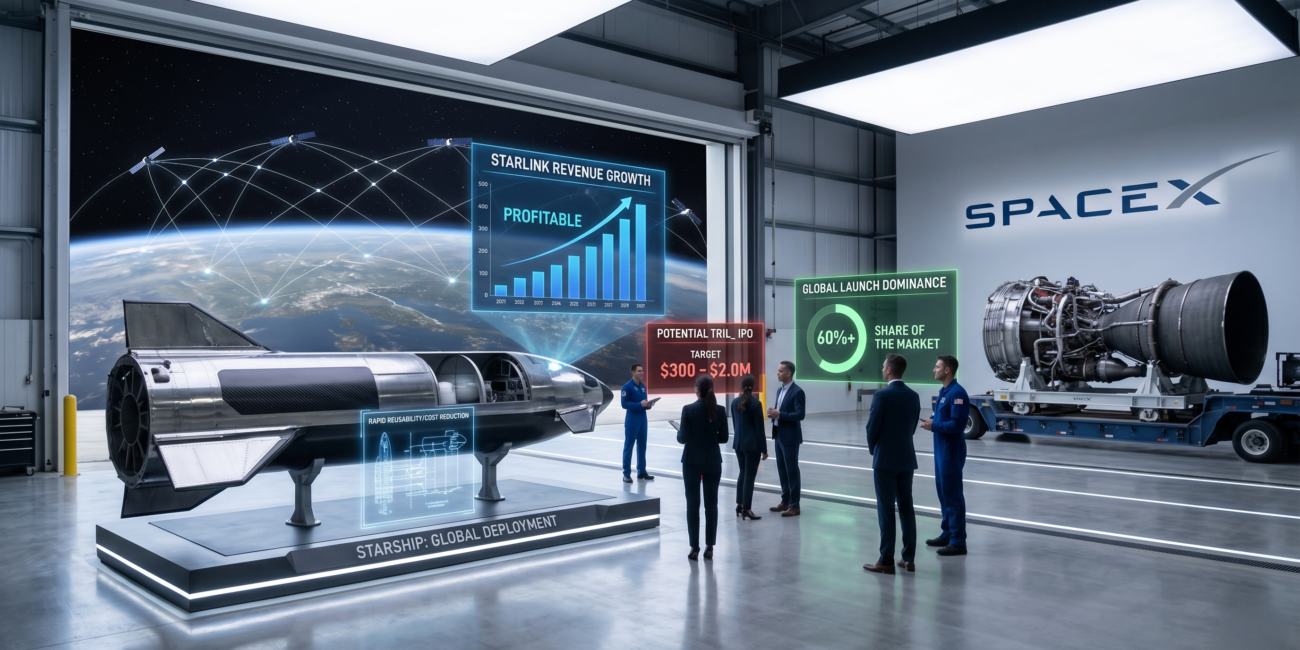
At the heart of this financial engine is Starlink, the company’s low-Earth orbit satellite internet constellation, which has officially transitioned from a capital-intensive cash drain into a highly lucrative revenue generator. For years, skeptics questioned whether the immense cost of manufacturing and launching thousands of satellites could ever be offset by consumer subscriptions. Recent financial disclosures have firmly answered those doubts, revealing that Starlink now accounts for more than half of SpaceX’s total revenue stream. The satellite division has achieved net profitability, a milestone that completely changes the risk profile for potential investors. By providing high-speed internet to rural households, maritime fleets, commercial aviation, and military units globally, Starlink has unlocked a recurring revenue model that stabilizes the volatile cash flows traditionally associated with rocket development.
This telecommunications dominance is poised for further expansion through strategic maneuvers in the spectrum and cellular markets. By aggressively acquiring spectrum licenses and investing billions into direct-to-cell capabilities, SpaceX is positioning Starlink to compete directly with terrestrial mobile network operators. The implications for the telecom sector are profound, as this technology allows standard, unmodified smartphones to connect directly to satellites in areas completely devoid of cell towers. For investors, this opens up a massive addressable market encompassing billions of mobile subscribers worldwide, effectively transforming SpaceX into a global roaming network provider that operates beyond the geographic limitations of traditional infrastructure.
While Starlink drives the top-line revenue growth, the launch services division remains the foundational moat that makes the entire ecosystem possible. SpaceX has achieved an effective monopoly on global orbital launches, accounting for the vast majority of commercial payloads sent into space. The operational cadence of the Falcon 9 and Falcon Heavy rockets has reached a point of routine manufacturing precision, setting records for launch frequency that legacy aerospace firms and state-sponsored space agencies simply cannot match. This relentless launch schedule is driven primarily by internal demand to build out the Starlink constellation, but it also services a lucrative backlog of commercial satellites, civil space agency missions, and highly classified national security payloads.
The economic secret behind this launch monopoly is rapid and complete reusability, a technological feat that has fundamentally rewritten the cost equations of spaceflight. By successfully landing and refurbishing orbital-class rocket boosters dozens of times, SpaceX has slashed the cost of delivering cargo to low-Earth orbit by roughly ninety-seven percent compared to historical averages. This dramatic cost reduction creates a compounding financial advantage: lower launch costs mean higher profit margins on commercial contracts and a cheaper path to deploying Starlink satellites, which in turn generates more cash to fund future exploration technologies. Legacy competitors find themselves trapped in a difficult position, forced to expend years of development and billions in capital just to match a level of reusability that SpaceX has already commoditized.
Looking toward the horizon, the financial community is closely watching the development of Starship, the massive next-generation vehicle designed to completely replace the Falcon line. The transition to advanced iterations of this launch system, featuring highly optimized engines and sophisticated mechanical recovery structures, represents the next phase of SpaceX’s industrial scaling. From an investment perspective, Starship is a double-edged sword. On one hand, its immense payload capacity is expected to lower the cost per kilogram to orbit even further, enabling the deployment of larger, more powerful V3 Starlink satellites and unlocking entirely new industries like orbital manufacturing and asteroid mining. On the other hand, the development program demands continuous capital expenditure and carries significant technological risks, as seen in the spectacular test flight anomalies that naturally accompany rapid, iterative engineering.
Furthermore, SpaceX’s deep integration with government defense and exploration budgets provides a reliable financial cushion that protects it from broader macroeconomic downturns. As a primary partner for NASA’s Artemis lunar program and a critical contractor for the United States Space Force, the company holds billions of dollars in long-term government backlogs. The creation of specialized, military-grade business units like Starshield demonstrates how effectively the company can repurpose its commercial satellite technology for national security applications. This close relationship with the defense establishment ensures a steady, non-cyclical stream of capital, making the company an appealing defensive asset for institutional portfolios.
However, entering the SpaceX ecosystem is not without considerable risk, and prudent investors must look past the immense hype to examine the potential pitfalls. The company currently commands a premium valuation multiple that prices in near-flawless execution across all business segments for the next decade. Any prolonged regulatory delays from agencies like the Federal Aviation Administration, or unforeseen technical failures during Starship’s operational transition, could lead to sharp downward revisions in internal valuations. Additionally, the company’s financial destiny remains deeply intertwined with the public persona and political alignments of Elon Musk, exposing investors to unique headline risks and governance complexities that are rare in traditional aerospace firms.
For the broader market, the ultimate question revolves around if, and when, SpaceX will choose to debut on public stock exchanges. While rumors of a Starlink spin-off or a full-blown SpaceX initial public offering persist, management has historically resisted the urge to go public, citing the quarterly earnings pressures of Wall Street as a distraction from their long-term multi-planetary objectives. Nevertheless, as early-stage venture capital investors seek liquidity and the capital requirements for Mars exploration scale into the hundreds of billions, the pressure to access the public capital markets will inevitably intensify. Until then, investors must monitor secondary market trends, satellite subscriber growth metrics, and launch cadence records to evaluate an enterprise that is quite literally building the infrastructure of the twenty-first-century space economy.