





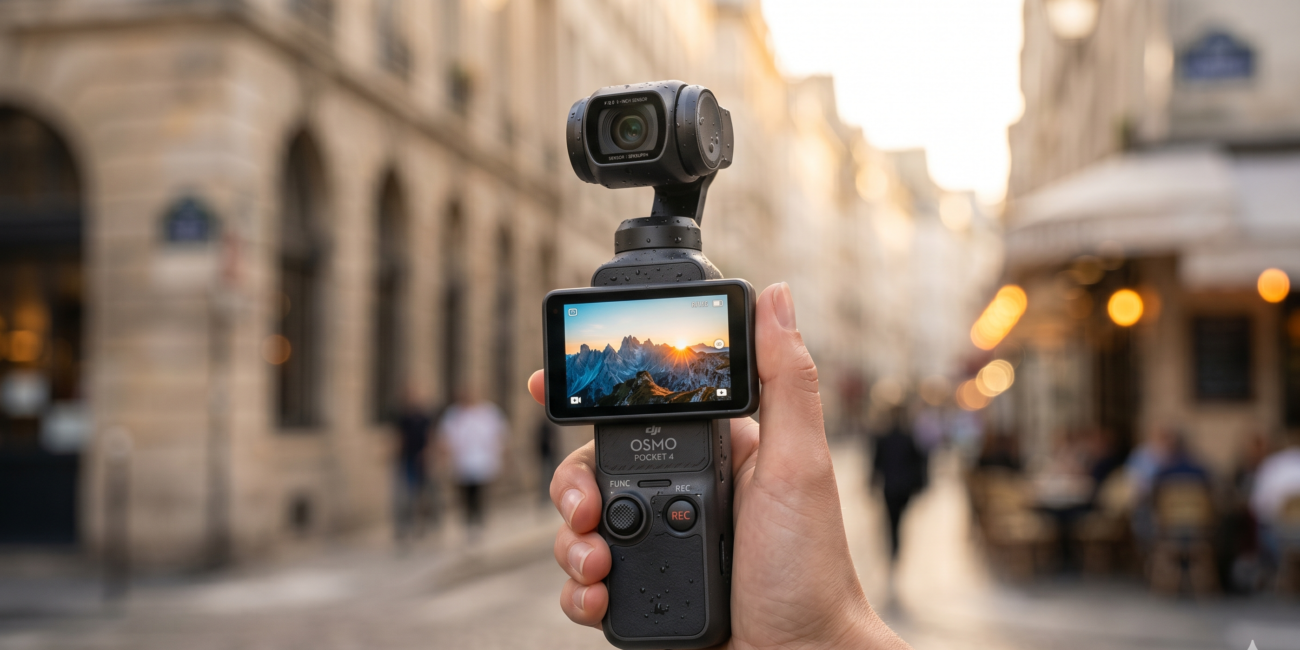
DJI Redefines Portable Cinematography: The Osmo Pocket 4 Arrives with 4K 240fps and Internal Storage
The world of compact filmmaking has undergone a seismic shift with the official unveiling of the DJI Osmo Pocket 4. For years, the Pocket series has occupied a unique niche in the gear bags of travel vloggers, documentary filmmakers, and social media creators, offering a level of mechanical stabilization that smartphones simply cannot replicate. However, with this latest iteration, DJI has moved beyond mere stabilization, transforming the device into a professional-grade cinema tool that fits in the palm of a hand. This launch represents more than just an incremental update; it is a fundamental reimagining of what a 1-inch sensor camera can achieve, specifically targeting the high-speed demands of modern digital storytelling.
A Leap in High-Speed Performance
The most discussed feature of the new Osmo Pocket 4 is its unprecedented slow-motion capability. While its predecessor was already a market leader with 4K at 120fps, the Pocket 4 doubles that performance, delivering 4K resolution at a staggering 240 frames per second. This technical achievement allows creators to slow down time by eight times while maintaining crisp, ultra-high-definition detail. This is not merely a gimmick for action sports; it provides wedding videographers the ability to capture cinematic dress flows or emotional glances with buttery smoothness, and it gives commercial creators the tools to shoot product B-roll that looks like it was produced on a high-end studio rig. The processing power required to handle such high frame rates is immense, and DJI has clearly upgraded the internal silicon to manage the thermal demands of 240fps recording without the immediate overheating issues that often plague small-form-factor cameras.
Solving the Storage Crisis
One of the most significant pain points for on-the-go creators has always been data management. Relying solely on microSD cards—which can be slow, prone to failure, or easily lost—has long been a risk for professional shoots. DJI has addressed this by integrating 107GB of high-speed internal storage directly into the Osmo Pocket 4. This addition serves two purposes: it acts as a fail-safe backup should a physical card fail, and it allows for immediate shooting the moment the device is powered on, even if a card isn’t present. With transfer speeds reaching up to 800MB/s via the upgraded USB 3.1 interface, moving large 4K files from the camera to a workstation is now faster than ever, significantly shortening the bridge between production and post-production.
Enhanced Dynamic Range and Color Science
While resolution and frame rates capture the headlines, the soul of the Osmo Pocket 4 lies in its improved 1-inch CMOS sensor. Although the sensor size remains consistent with the previous generation, the internal architecture has been refined to deliver 14 stops of dynamic range. This improvement is critical for creators who frequently find themselves shooting in challenging lighting conditions, such as high-contrast sunsets or dimly lit interiors. By expanding the dynamic range, the camera preserves more detail in the deepest shadows and the brightest highlights, preventing the “blown-out” look common in smaller sensors. Furthermore, DJI has introduced a full 10-bit D-Log color profile, moving away from the D-Log M version used previously. This provides professional colorists with a flatter, more data-rich image to work with, allowing for aggressive color grading and seamless matching with footage from larger cinema cameras.
Intelligence Through ActiveTrack 7.0
Stabilization is only half the battle when filming solo; keeping the subject in frame is the other. The Osmo Pocket 4 introduces ActiveTrack 7.0, an AI-driven system that has been trained on significantly larger datasets to recognize and follow subjects with uncanny accuracy. The new system is particularly adept at maintaining a lock on a subject even when they are partially obscured or moving quickly across the frame. Perhaps most impressively, this tracking remains functional even at 4x digital zoom, a feat that usually results in “hunting” or lost focus in lesser cameras. The integration of gesture controls, such as the ability to trigger tracking or start recording with a simple hand sign, further cements this device as the ultimate tool for the solo content creator who lacks a dedicated camera operator.
Physical Design and Ergonomic Evolution
DJI has also listened to user feedback regarding the physical handling of the device. While the signature rotating OLED touchscreen returns, it is now accompanied by a more robust set of physical controls. A new 5D analog joystick has been added, providing tactile precision for manual gimbal pans and tilts that a touchscreen simply cannot provide. This allows for smoother, more organic camera movements that mimic the look of a full-sized crane or jib. Additionally, two customizable physical buttons have been placed behind the screen, allowing users to map their most-used functions—such as ISO toggle or Focus Peaking—to a physical press. This shift toward “blind” tactile control means creators can keep their eyes on the action rather than fumbling through digital menus.
Battery Life and Thermal Management
A common concern with high-performance compact electronics is how long they can sustain peak performance. The Osmo Pocket 4 features an optimized battery system that claims up to 240 minutes of continuous recording in standard 1080p mode. Even when pushing the device to its limits in 4K, the efficiency of the new chipset ensures that shooting sessions aren’t cut short by power drain. To combat the heat generated by the 240fps recording and 14-stop processing, DJI has implemented a passive cooling system that utilizes the gimbal’s alloy frame as a heat sink. This design ensures that the camera remains comfortable to hold and operational even during extended outdoor shoots in warmer climates.
Photographic Capabilities and SuperPhoto Mode
While primarily a video tool, the Osmo Pocket 4 has seen a massive jump in its still-photography credentials. The new SuperPhoto mode utilizes computational photography to produce 37-megapixel images from the 1-inch sensor. By stacking multiple exposures and using AI to reduce noise, the camera produces still images that rival many dedicated point-and-shoot cameras. For creators who need to capture high-quality thumbnails or social media posts alongside their video content, this upgrade eliminates the need to carry a second camera for photography.
Market Availability and Regional Considerations
The global launch of the Osmo Pocket 4 has been met with significant excitement, though it arrives during a complex regulatory period. In most international markets, including India, Europe, and Southeast Asia, the device is rolling out across all major retail channels immediately. However, there is a cloud of uncertainty regarding its availability in the United States. Due to ongoing legislative discussions regarding the registration of new DJI products, US consumers may face delays or may need to rely on existing stock of older models until the regulatory landscape clears. Despite these hurdles, the technical superiority of the Pocket 4 makes it the most anticipated release in the compact camera market this year.
The New Standard for Digital Storytelling
In summary, the DJI Osmo Pocket 4 is a testament to how far miniaturized optics and processing have come. It is no longer just a “vlogging camera”; it is a high-speed, high-dynamic-range cinema tool that happens to fit in a pocket. By combining 4K 240fps video, professional 10-bit color science, and substantial internal storage, DJI has effectively raised the bar for what creators should expect from portable gear. As digital platforms continue to prioritize high-production-value video, the Pocket 4 provides a bridge for millions of creators to elevate their work to a professional standard without the weight or cost of traditional cinema equipment. Whether it is being used to capture a fast-paced travel montage or a professional commercial spot, the Osmo Pocket 4 is poised to become the new gold standard for creators worldwide.







[…] Also Read This […]