



Apple Agrees to $250 Million Settlement Over Delayed Siri AI Features and Apple Intelligence Claims
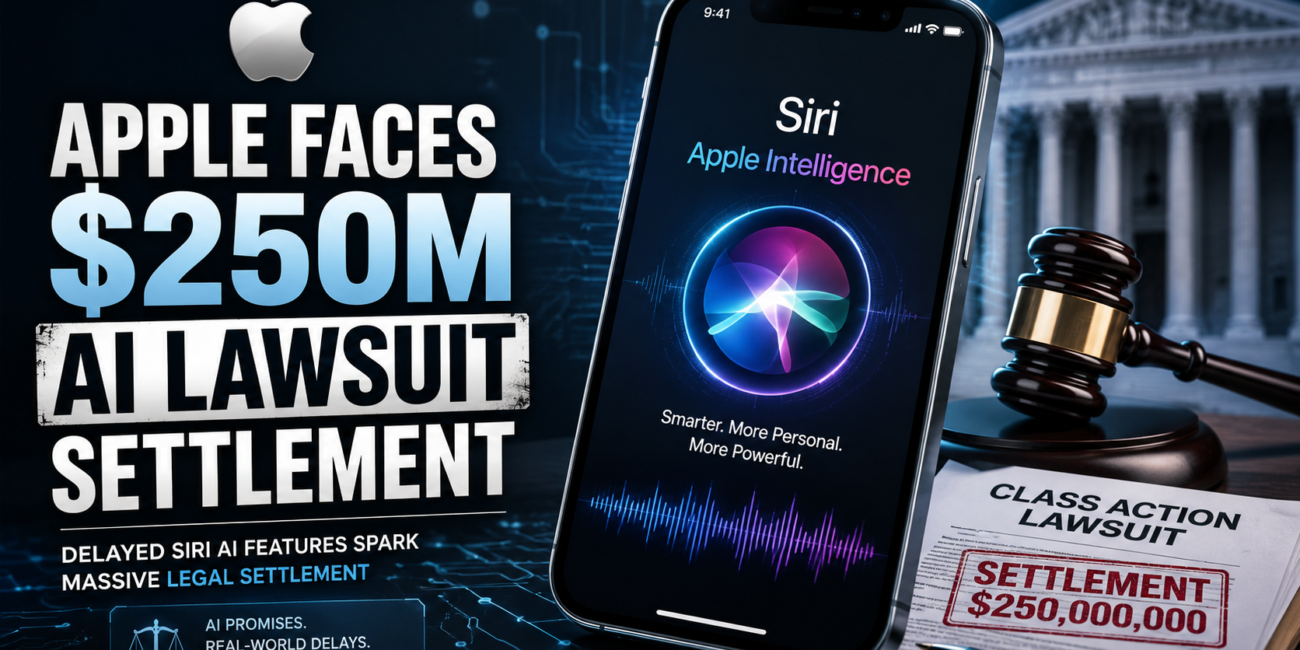
Apple has agreed to a massive $250 million settlement after facing legal action over delayed artificial intelligence features connected to Siri and Apple Intelligence. The case has become one of the biggest controversies surrounding the company’s AI ambitions and has raised serious questions about how major technology companies promote unfinished AI products to consumers.
The lawsuit focused on Apple’s marketing campaign for Apple Intelligence, the company’s new AI-powered system introduced during WWDC 2024. Apple had presented the next generation of Siri as smarter, more personal, and deeply integrated into users’ daily activities. During product launches and advertisements, Apple strongly promoted the idea that the iPhone 16 series was built specifically for Apple Intelligence. However, many of the most talked-about features were not available when customers purchased the devices.
The legal dispute quickly gained national attention because millions of consumers believed they were buying iPhones that would immediately support advanced AI capabilities. Instead, several key Siri functions were delayed, postponed, or rolled out in limited form months later. Critics argued that Apple created unrealistic expectations during a time when competition in artificial intelligence was becoming more intense across the technology industry.
The lawsuit accused Apple of misleading both consumers and investors through aggressive marketing. According to the complaint, Apple used the excitement around AI to increase iPhone sales while knowing that several important features were still under development. Although Apple denied any wrongdoing, the company eventually agreed to settle the case rather than continue a lengthy legal battle.
The controversy started after Apple introduced Apple Intelligence at its Worldwide Developers Conference in June 2024. During the event, the company showcased a new AI-powered Siri capable of understanding personal context, responding more naturally, and interacting deeply with apps and user data. Apple executives described Siri as more conversational and intelligent than ever before. Demonstrations showed Siri helping users manage schedules, understand messages, summarize information, and complete complex tasks using artificial intelligence.
The announcements generated huge excitement among consumers and investors. Many analysts viewed Apple Intelligence as the company’s answer to growing competition from Google, Microsoft, OpenAI, and Samsung. Artificial intelligence had become the center of the tech industry, and Apple’s entry into the race was seen as extremely important for the future of the iPhone ecosystem.
When Apple launched the iPhone 16 lineup later in 2024, the devices were marketed heavily around Apple Intelligence. Advertising campaigns promoted the phones as AI-ready products designed for the future of Siri. However, as customers began using the devices, many discovered that some major features shown during Apple’s presentations were either unavailable or incomplete.
Among the delayed capabilities were personalized Siri responses, advanced app integrations, deeper contextual understanding, and more natural AI conversations. Apple later confirmed that several of these features would arrive gradually through future updates instead of being available immediately at launch.
This delay became the center of the lawsuit. Plaintiffs argued that Apple’s advertising gave customers the impression that all major Apple Intelligence features would be available when they purchased the devices. Some consumers claimed they upgraded specifically because of the AI promises shown in Apple’s keynote presentations and marketing materials.
Legal experts noted that the case reflects a growing challenge within the technology industry. As companies compete to dominate artificial intelligence, many firms announce products before they are fully ready. The pressure to appear innovative has increased dramatically since the rapid rise of generative AI systems like ChatGPT and Google Gemini. In Apple’s case, critics claimed the company attempted to catch up in the AI race by promoting features too early.
Reports also suggested that Apple modified or removed some promotional material related to Siri AI after criticism increased. Advertising watchdogs questioned whether the company’s “Available Now” messaging accurately represented the actual status of the AI tools. Regulators and consumer advocacy groups argued that customers may have been confused about what features were truly ready at launch.
Under the settlement agreement, eligible customers in the United States may receive compensation depending on how many claims are submitted. Reports indicate that users who purchased certain eligible iPhone models between June 2024 and March 2025 could qualify for payments ranging from approximately $25 to $95 per device. The final amount will depend on the number of approved claims.
The settlement is expected to cover buyers of the iPhone 16 series as well as some iPhone 15 Pro models that supported Apple Intelligence. Customers will likely need to provide proof of purchase when the official claims process begins.
Despite the controversy, Apple defended its broader AI strategy and emphasized that many Apple Intelligence features have already launched successfully. The company highlighted tools such as Writing Tools, Genmoji, Image Playground, ChatGPT integration, Visual Intelligence, and Live Translation as examples of its growing AI ecosystem. Apple stated that it continues to work on expanding Siri’s capabilities through future software updates.
The company also stressed that settling the lawsuit does not mean it admitted wrongdoing. Apple described the decision as a practical step to avoid extended litigation and remain focused on product innovation. Large corporations often choose settlements in high-profile consumer cases because court battles can continue for years and create negative publicity.
Even so, the situation has affected Apple’s reputation in the artificial intelligence market. For years, Apple positioned itself as a company that avoids launching unfinished products. Unlike some competitors, Apple traditionally focused on polished user experiences and carefully timed releases. The Siri AI controversy challenged that image because consumers felt the company promised more than it delivered.
Industry analysts believe the lawsuit may influence how technology companies advertise AI products in the future. Regulators are increasingly paying attention to AI-related claims, especially when companies market experimental or partially completed systems as consumer-ready products. Experts say businesses may face greater legal risks if they exaggerate AI capabilities or fail to clearly explain feature limitations.
The case also highlights the enormous pressure surrounding the AI race among major technology firms. Companies are investing billions of dollars into artificial intelligence because they see it as the future of smartphones, search engines, productivity tools, and digital assistants. Apple entered the AI competition later than some rivals, which increased expectations around Apple Intelligence and Siri upgrades.
Many consumers still believe Apple has the resources and ecosystem to become a major AI leader in the coming years. However, the lawsuit serves as a reminder that even the world’s largest technology companies can face backlash when product marketing moves faster than actual development.
As Apple continues rolling out new Siri features throughout 2026, the company will likely face close scrutiny from both customers and regulators. Future updates to Apple Intelligence will play a critical role in determining whether Apple can rebuild trust and successfully compete in the rapidly evolving artificial intelligence market.
The $250 million settlement may close the legal chapter of the controversy, but the debate surrounding AI hype, consumer expectations, and responsible marketing in the tech industry is far from over. Apple’s experience could become an important example for the entire industry as artificial intelligence continues transforming modern technology.